
Startup Accelerators, Startup Incubators, Startup Studios: What’s the Right Choice for Your Business Idea?
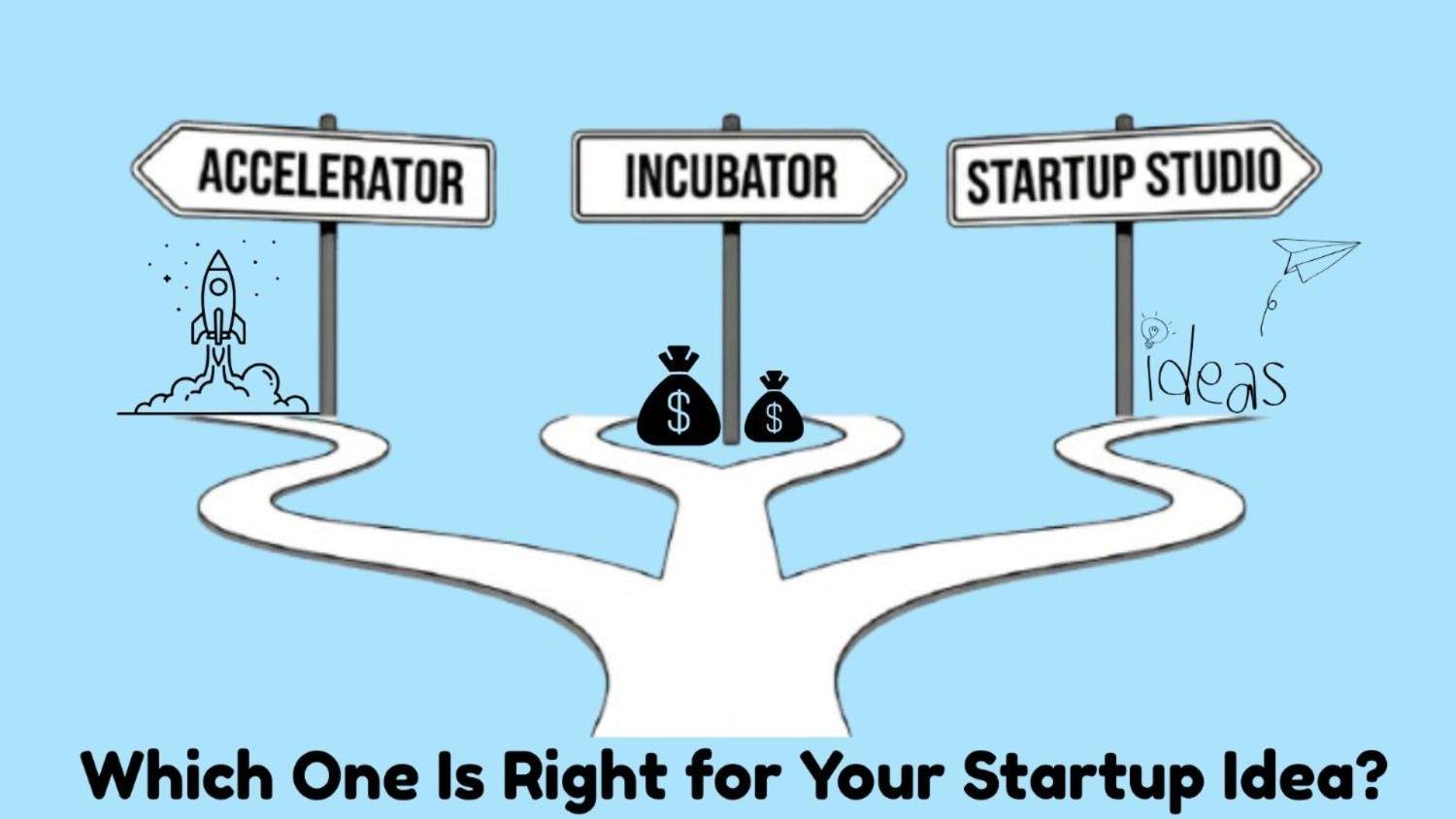
Choosing between startup accelerators, startup incubators, and startup studios is one of the most important early decisions a founder can make. Each model offers a different level of support, speed, and involvement, which directly impacts how your startup grows, raises funding, and reaches the market. The right choice depends not just on your idea, but on your current stage, team strength, and long-term goals.
1. Understanding the Three Startup Models
Each of these models exists to solve a different startup challenge. Some focus on nurturing ideas, others on scaling quickly, and some on actually building the business alongside you. Understanding their core purpose helps avoid choosing a path that either slows you down or pushes you too fast before you are ready.
Startup Accelerators
Startup accelerators are designed to compress years of growth into a few months. They provide structured mentorship, access to investors, and a fast-paced environment where startups refine their business model and prepare for funding rounds. The goal is not to build from scratch, but to scale something that already shows potential.
- Duration: Typically 3 to 6 months
Short programs designed to push rapid progress within a fixed timeline - Focus: Rapid scaling, investor readiness
Helps startups prepare for funding and aggressive growth - Structure: Cohort-based with mentorship and demo day
Startups learn alongside peers and pitch to investors at the end - Investment: Small seed funding in exchange for equity (5 to 15%)
Provides capital in return for a small ownership stake
Startup Incubators
Startup incubators are built for founders who are still shaping their ideas. Instead of rushing growth, they provide a supportive environment where startups can experiment, validate assumptions, and develop a strong foundation. This model reduces early-stage risk by allowing more time for learning and iteration.
- Duration: 6 months to 2 years or more
Allows founders enough time to refine ideas without pressure - Focus: Idea validation and business development
Helps turn concepts into workable business models - Structure: Flexible, less intensive
No strict deadlines, allowing gradual progress - Investment: Often little to no equity required
Many incubators focus on support rather than ownership
Startup Studios
Startup studios take a fundamentally different approach by acting as co-founders. Instead of just advising or mentoring, they actively participate in building the startup. This includes product development, hiring, marketing, and operations. This model significantly increases the speed of execution but requires founders to give up more equity.
- Duration: Long-term involvement
Studios stay involved until the startup becomes stable - Focus: Execution and co-building
They help actually build the product and business - Structure: Internal team supports product, marketing, hiring
Founders get access to a ready-made expert team - Investment: High, but with significant equity (30 to 80%)
Larger support comes with higher ownership taken
2. How to Understand What Stage Your Startup Is In
Before choosing between a tech startup incubator or one of the best startup accelerators for early stage, you need to clearly identify your startup stage. Many founders make the mistake of joining accelerators too early or incubators too late, which leads to wasted time and missed opportunities.
Idea Stage
This is the most fragile stage of a startup. At this point, the focus is on understanding the problem, defining the target market, and shaping a viable business model. There is little to no product, and uncertainty is high. Founders need guidance, not pressure to scale.
- No product or only a concept
The idea exists but has not been built yet - Focus on research and validation
Effort goes into understanding the market and problem - Small or solo team
Usually led by one founder or a very small group
Early Development Stage
At this stage, startups begin transforming ideas into real products. The creation of a Minimum Viable Product allows founders to test assumptions with real users. The goal here is to validate whether the product actually solves a meaningful problem.
- Minimum Viable Product (MVP) exists
A basic version of the product is built and usable - Early users or customers
Some people are testing or using the product - Searching for product-market fit
Trying to confirm if the product solves a real need
Growth Stage
Startups in the growth stage have already validated their product and are now focused on scaling. This involves expanding the customer base, optimizing operations, and raising larger funding rounds. At this point, speed becomes critical, and structured programs can significantly accelerate progress.
- Proven product with demand
Customers are actively using and paying for the product - Scaling operations and team
Hiring more people and expanding operations - Raising Series A or beyond
Looking for larger investments to grow faster
3. Key Differences: Startup Incubator vs Accelerator vs Studio
Understanding the startup incubator vs accelerator comparison is essential because each option represents a different trade-off between speed, control, and support.
Speed of Growth
- Incubators: Slow and steady
Focuses on careful development over time - Accelerators: Fast-paced growth
Designed to compress years of progress into months - Studios: Fast but structured execution
Combines speed with hands-on building support
Level of Support
- Incubators: Mentorship and workspace
Provides guidance and a place to work - Accelerators: Mentorship plus funding
Adds financial support to expert guidance - Studios: Full execution team
Offers people who actively build the business
Equity Trade-Off
- Incubators: 0 to 10%
Minimal ownership is given away - Accelerators: 5 to 15%
Moderate equity for funding and mentorship - Studios: 30 to 80%
High equity in exchange for full involvement
Team Requirement
- Incubators: Solo founders accepted
Ideal for individuals starting out - Accelerators: Require small teams
Teams are needed to handle fast growth - Studios: Provide team if needed
Useful for founders without technical skills
4. When to Choose Startup Accelerators
If your goal is rapid growth, access to funding, and exposure to investors, accelerators are the most effective option.
Examples
- Y Combinator ( https://www.ycombinator.com/)
One of the most well-known accelerators with companies like Airbnb and Stripe - Techstars (https://www.techstars.com/)
Offers global mentorship programs and strong corporate partnerships - 500 Global
Focuses on international startup scaling and emerging markets
5. When to Choose Startup Incubators
Startup incubators are best suited for founders who need time, guidance, and a low-risk environment to develop their ideas.
Examples
- Plug and Play Tech Center
Operates globally with programs connecting startups to large enterprises - Startupbootcamp
Runs industry-focused programs across multiple countries - MassChallenge
A non-equity program supporting startups worldwide
6. When to Choose Startup Studios
Startup studios are ideal if execution is the biggest challenge.
Examples
- High Alpha
Focuses on SaaS startup creation and scaling - Rocket Internet
Known for launching and scaling global internet businesses - CodeVentures
A startup studio helping founders launch and grow faster
7. How to Choose the Right Option for Your Business Idea
Choosing between startup accelerators, startup incubators, startup studios ultimately comes down to aligning your current situation with the right type of support.
Your Priority
- Mentorship → Incubator or Accelerator
Choose based on how intensive guidance is needed - Funding → Accelerator
Best option if capital is the main need - Execution → Studio
Ideal if you need help building the business
Your Resources
- No team → Studio or Incubator
Helps build or guide your team - Small team → Accelerator
Supports scaling with an existing team - Full team → Accelerator or independent growth
You may only need funding and connections
Your Growth Goal
- Slow validation → Incubator
Focus on refining your idea - Fast scaling → Accelerator
Aim for quick market expansion - Built-from-scratch execution → Studio
Get full support in creating the startup
Ready to Turn Your Startup Idea Into Reality?
Make smarter startup decisions with the CodeVentures Equity Calculator – designed to help founders balance ownership, funding, and growth.
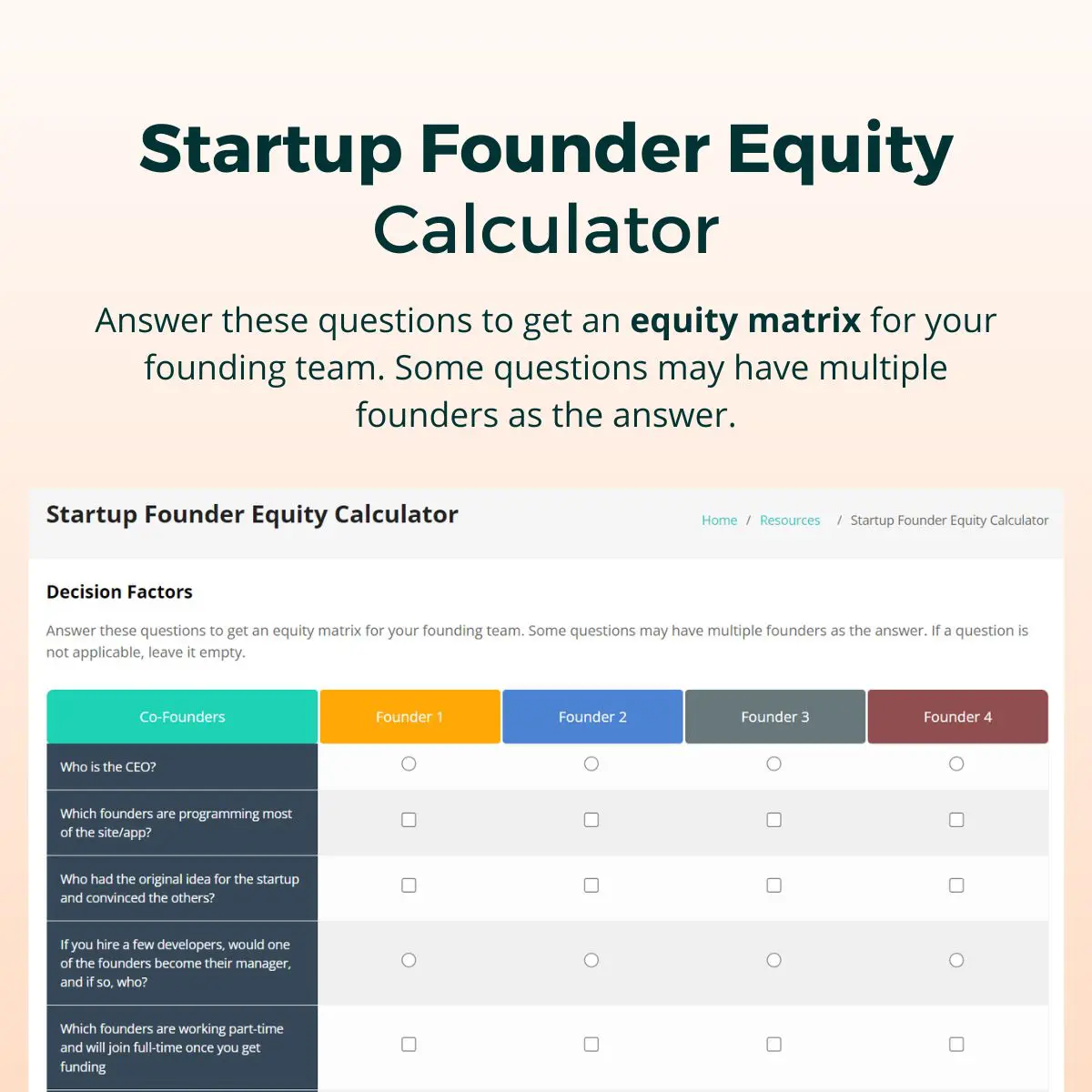
Use Codeventure’s Startup Equity Calculator Today!

