
How to Choose Tech Stack for a Startup

A tech stack is the combination of technologies used to build and run a software product. It consists of the frameworks, databases, servers, programming languages, and tools that come together to make an application work. Selecting the appropriate tech stack is crucial because it has a direct impact on how quickly you can develop your product, how easy it can expand when its user base grows, and how much it will cost to maintain over time.
Early technological choices can either facilitate a startup’s rapid growth or lead to technical issues down the road. Overengineering too early using complicated technology or creating sophisticated systems before they truly require them is a common error made by founders. The initial objective should be to construct something basic, test the concept rapidly, then advance the technology as the product develops.
2. Understand Your Startup Requirements First
Before choosing a tech stack, it is important to clearly understand your startup’s requirements. Start by identifying the type of product you are building, whether it is a SaaS platform, marketplace, mobile application, AI-based product, or something else. Different types of products need different technologies and development approaches.
Next, consider how many users you anticipate. When creating an MVP (Minimum Viable Product), you should prioritize rapid development and market testing. You could want more robust infrastructure that can manage more traffic and scale seamlessly when your product begins to expand and draw in more people.
You should think about your performance requirements as well. Real-time performance and quick response times are necessary for certain applications, like online gaming systems, chat apps, and live tracking platforms. Technologies that can effectively store, process, and analyze data are necessary for other platforms that handle massive volumes of data.
Lastly, remember your timeframe and budget. You can prevent needless costs and delays by selecting technologies that complement your available resources. You can launch more quickly with a useful tech stack, and as your startup expands, you can make improvements.
3. Define MVP vs Long-Term Vision
Before selecting a tech stack, it is important to clearly separate your MVP goals from your long-term vision. An MVP (Minimum Viable Product) is the simplest version of your product that solves one main problem for users. At this stage, the focus should be on launching quickly, learning from real users, and validating your idea. You only need the core features that help users understand the value of your product. Fancy designs, complex automation, advanced analytics, or large-scale infrastructure are usually not necessary in the beginning.
It is safe to postpone many functionalities till later. Once your product becomes popular, you can add features like sophisticated microservices architecture, high-level security layers, speed optimization for millions of users, or advanced integrations. Attempting to create everything at once frequently results in increased expenses and a slowdown in development.
Additionally, startups should steer clear of the “future-proofing trap.” This occurs when entrepreneurs select complex technology or construct large systems with the expectation of future expansion that might not occur right away. It is preferable to create something straightforward that meets your present needs and can grow over time rather than planning for millions of people right now.
Scalability and speed must be balanced. Your MVP should be simple to modify in response to feedback and quick to construct. Additionally, the technology you select should enable updates as the product develops. As your firm advances toward its long-term goals, it’s a smart idea to start small, learn from consumers, and progressively improve the system.
Quick Tech Stack Checklist
Before choosing any technology, founders should first focus on the basics. This quick checklist helps you make practical tech decisions without overcomplicating things.
- Define your product type – Understand whether you are building a SaaS product, marketplace, mobile app, AI platform, or internal tool. Different products need different technologies.
- Build an MVP first – Focus on creating a simple version of your product that solves one core problem. Avoid building advanced systems before validating user demand.
- Choose familiar technologies – Select tools and frameworks your team already knows or can learn quickly. Familiar technology speeds up development and reduces mistakes.
- Start with a monolith architecture – Keep the system simple in the beginning. A single, well-structured application is easier to build, test, and manage than complex microservices.
- Use cloud infrastructure – Cloud platforms help startups launch faster without managing physical servers. They also allow easy scaling when users grow.
- Optimize after growth – Do not design for millions of users on day one. Improve performance, scalability, and infrastructure only when real growth requires it.
This checklist acts as a simple guide to keep your startup focused on speed, learning, and practical progress instead of unnecessary technical complexity.
4. Frontend Technology Choices
Choosing the right frontend technology is important because it directly affects how users experience your product. The frontend includes everything users see and interact with buttons, pages, forms, dashboards, and overall design. A good frontend should feel fast, simple, and easy to use.
Web Application Frameworks :
Popular web frameworks like React, Vue, and Angular help developers build modern and interactive websites. These frameworks make it easier to manage complex user interfaces and speed up development. Startups often choose a framework that their team already knows well, since familiarity helps in building and updating features faster.
Mobile App Development Options :
When building mobile applications, startups have multiple options. Tools like Flutter and React Native allow developers to create apps for both Android and iOS using a single codebase, which saves time and cost. Another option is native development, where separate apps are built for each platform using platform-specific languages. Native apps can provide better performance but usually require more time and resources to develop and maintain.
Key Factors to Consider :
While selecting frontend technologies, founders should focus on a few important factors. Development speed is crucial because faster tools help launch the product sooner. UI flexibility allows designers and developers to create smooth and attractive user experiences. Developer availability is also important, as widely used technologies make hiring easier and provide strong community support. The best frontend choice is usually the one that helps your team build quickly while delivering a great user experience.
5. Backend Technology Choices
The backend is the part of your product that works behind the scenes. It manages databases, user authentication, payments, business logic, and communication between different parts of the application. Even though users do not see it directly, the backend plays a major role in making your product reliable, secure, and scalable as it grows.
Popular Backend Technologies :
Startups use different backend technologies depending on their needs. Node.js is commonly chosen for fast development and real-time applications because it works well with JavaScript. Django, built with Python, is known for its simplicity, strong security features, and quick development process. Spring Boot, based on Java, is widely used for large and enterprise-level applications that require high performance and stability. The best choice usually depends on your product requirements and your team’s technical expertise.
Choosing Based on Complexity and Scalability :
When selecting a backend technology, it is important to consider how complex your application is and how much it may grow in the future. Simple products or MVPs generally work best with lightweight and easy-to-manage frameworks. As your user base increases, you may need technologies that support better performance, efficient data handling, and stronger system stability.
Monolith vs Microservices Architecture :
Another key decision is choosing between a monolith and a microservices architecture. A monolith means building the entire application as one system, which is easier to develop, test, and maintain in the early stages. Microservices divide the application into smaller independent services that can scale separately and handle complex systems more efficiently. However, microservices introduce additional complexity and are usually more suitable for later growth stages. Many successful startups start with a monolith and transition to microservices only when scaling truly requires it.
6. Database Selection
Choosing the right database is important because it decides how your product stores and manages data. Startups usually choose between SQL and NoSQL databases based on data structure, scalability, and consistency needs.
SQL vs NoSQL – Key Differences :
| Feature | SQL Databases | NoSQL Databases |
| Data Structure | Tables with rows and columns | Flexible document or key-value format |
| Schema | Fixed structure | Flexible structure |
| Best For | Structured and relational data | Large or changing data |
| Scalability | Vertical scaling | Horizontal scaling |
| Consistency | Strong consistency | High flexibility and speed |
| Examples | PostgreSQL, MySQL | MongoDB |
When to Use Each Database :
PostgreSQL is ideal for products that need strong data relationships and reliability, such as SaaS platforms or marketplaces.
MySQL is simple, stable, and suitable for most web applications and early-stage startups.
MongoDB works well when data structures change often or when handling large volumes of flexible data.
Key Considerations :
- Use SQL when data accuracy and relationships are important.
- Use NoSQL when flexibility and scaling quickly matter more.
- Many startups start with SQL and add NoSQL later as the product grows.
7. Hosting & Cloud Infrastructure
What is Hosting and Cloud Infrastructure?
Hosting and cloud infrastructure refer to where your application lives and how it runs on the internet. After building your product, you need servers to store data, run backend processes, and make your application accessible to users anytime. Cloud platforms help startups launch quickly without buying or managing physical servers.
Popular Cloud Providers
Many startups use cloud providers like Amazon Web Services (AWS), Microsoft Azure, and Google Cloud. These platforms offer storage, databases, security tools, and computing power on demand. They allow startups to start small and increase resources as the number of users grows.
Serverless vs Traditional Servers
Startups can choose between serverless systems and traditional servers. Serverless platforms automatically manage servers for you, so developers only focus on writing code. This reduces maintenance work and is useful for MVPs or unpredictable traffic.
Traditional servers give more control over configuration and performance but require ongoing management and monitoring. They are often preferred when applications become more complex or need consistent performance.
Deployment Strategies
Deployment is the process of releasing your application to users. Tools like Docker package your application with everything it needs to run, making deployment easier and more consistent across environments. Kubernetes helps manage multiple containers and automatically handles scaling, updates, and system reliability. Many startups begin with simple deployments and adopt advanced tools as they grow.
Cost vs Scalability Trade-Offs
Cloud infrastructure decisions often involve balancing cost and scalability. Starting with smaller resources keeps costs low during early stages. As traffic increases, cloud platforms allow you to scale resources without rebuilding the system. The best approach is to choose infrastructure that supports quick launches while allowing easy expansion when your startup grows.
8. API & Integration Strategy
What is an API?
APIs (Application Programming Interfaces) allow different software systems to communicate with each other. They help your frontend talk to the backend and also allow your product to connect with external services like payments, authentication, or analytics. A good API strategy helps startups build faster without creating everything from scratch.
REST vs GraphQL
REST is the most commonly used API style. It is simple, reliable, and easy to implement, making it a good choice for most startups and MVPs. Each request usually returns fixed data from specific endpoints.
GraphQL gives more flexibility by allowing the frontend to request only the exact data it needs. This can improve performance in complex applications but may require more setup and planning compared to REST. Many startups start with REST and explore GraphQL as their product grows.
Third-Party APIs vs Building In-House
Startups often use third-party APIs to save time and development effort. Instead of building every feature themselves, they integrate ready-made services for payments, messaging, emails, or maps. This helps teams launch faster and focus on their core product.
Building features in-house makes sense when the functionality is central to your business or when you need full control over performance, customization, or data security. A common approach is to begin with third-party tools and replace them later if needed.
Common Integrations for Startups
Most products rely on external integrations such as payment gateways for transactions, authentication systems for secure logins, and analytics tools to understand user behavior. Using trusted services for these functions reduces development complexity, improves reliability, and allows startups to scale more easily.
9. Developer Ecosystem & Hiring Considerations
Availability of Developers
When choosing a tech stack, it is important to consider how easy it will be to hire developers. Technologies that are widely used usually have a larger talent pool, making recruitment faster and more affordable. If your stack is too niche or uncommon, finding skilled developers later can become difficult and slow down product development.
Learning Curve and Onboarding Speed
Another important factor is how quickly new developers can understand and start working with your technology. A stack with a simple learning curve helps teams onboard faster and become productive sooner. This is especially important for startups, where teams often grow quickly and need new members to contribute without long training periods.
Community Support and Documentation
Strong community support and clear documentation make development much easier. Popular technologies usually have active communities, tutorials, forums, and ready-made solutions for common problems. Good documentation helps developers fix issues quickly, learn best practices, and reduce development time. Choosing a technology with strong community backing can save both time and effort as your startup grows.
10. Speed of Development vs Scalability
Prioritizing Rapid MVP Development
In the early stages of a startup, speed is usually more important than scalability. The main goal is to build an MVP (Minimum Viable Product) quickly and test whether users actually need your solution. Simple technologies, faster frameworks, and ready-made tools help you launch sooner and gather real feedback instead of spending months building complex systems.
When to Optimize for Scale
Scalability becomes important once your product starts gaining users and consistent growth. At this stage, you may need better infrastructure, improved performance, and systems that can handle higher traffic. Optimizing for scale makes sense when you have proven demand and clear usage patterns, not before.
Avoiding Premature Optimization
Many startups make the mistake of optimizing too early. Premature optimization happens when teams spend time building advanced architectures, performance systems, or complex infrastructure before they truly need them. This often slows development and increases costs without real benefits. A better approach is to start simple, validate the product, and improve scalability step by step as the business grows.
11. Security and Compliance Factors
Basic Security Considerations from Day One
Security should be considered from the beginning, even when building an MVP. Simple practices like secure authentication, strong password policies, regular software updates, and limiting access permissions can prevent many common security risks. Building secure habits early is much easier than fixing security problems later.
Data Protection and Encryption
Startups must protect user data carefully. Sensitive information such as passwords, personal details, and payment data should always be encrypted. Using HTTPS, secure databases, and trusted authentication systems helps keep user information safe. Proper data protection builds user trust and reduces the risk of data breaches.
Industry-Specific Compliance Needs
Some industries require startups to follow specific legal and compliance standards. For example, fintech, healthcare, and education platforms may need additional data protection rules or regulatory approvals. Understanding compliance requirements early helps avoid legal issues and ensures your product can scale safely in regulated markets.
12. Cost Considerations
Development Cost vs Maintenance Cost
When choosing a tech stack, startups should think beyond initial development costs. Some technologies may be cheap and fast to build at the beginning but become expensive to maintain later. Maintenance includes server management, updates, bug fixes, and developer salaries. A good tech decision balances both short-term development speed and long-term sustainability.
Infrastructure Pricing Models
Cloud platforms usually follow pay-as-you-go pricing, where you only pay for the resources you use. Costs may include servers, storage, databases, bandwidth, and additional services like monitoring or backups. Starting with smaller resources helps control expenses, while cloud infrastructure allows you to increase capacity as your user base grows.
Hidden Costs in Scaling Tech Choices
Some costs only appear when your product starts scaling. Complex architectures, poorly optimized databases, or unnecessary services can increase infrastructure bills quickly. Hiring specialists for rare technologies can also raise operational costs. Choosing simple, widely supported technologies in the early stages helps avoid unexpected expenses and keeps scaling more manageable.
13. Popular Startup Tech Stack Examples
- MERN Stack (MongoDB, Express, React, Node.js)
Full-stack JavaScript stack used for scalable web applications and SaaS products. - LAMP Stack (Linux, Apache, MySQL, PHP)
Traditional and cost-effective stack widely used for websites and CMS platforms. - Serverless Stack (AWS Lambda + Frontend Frameworks)
Cloud-native architecture that eliminates server management and scales automatically. - AI/ML Stack (Python, TensorFlow, PyTorch, FastAPI)
Used for artificial intelligence products, data analytics platforms, and machine learning applications.
- MEAN Stack (MongoDB, Express, Angular, Node.js)
JavaScript-based full-stack alternative to MERN using Angular. - JAMstack (JavaScript, APIs, Markup)
Modern architecture focused on performance, security, and static site generation. - Ruby on Rails Stack (Ruby, Rails, PostgreSQL)
Ideal for rapid MVP development and early-stage startups. - Django Stack (Python, Django, PostgreSQL)
Secure and scalable backend stack commonly used for data-driven applications. - Flutter + Firebase Stack
Popular for building cross-platform mobile apps quickly with backend services included. - Next.js + Node.js Stack
Modern React-based framework optimized for SEO-friendly and high-performance web apps. - Spring Boot Stack (Java, Spring Boot, MySQL/PostgreSQL)
Enterprise-grade stack suitable for fintech, large-scale, and secure applications.
14. Common Mistakes to Avoid
-> Choosing Technology Based on Hype
Many founders pick technologies because they are trending or popular instead of evaluating whether they actually fit the product’s needs. The best tech stack is not the newest one, it is the one your team can build and maintain efficiently.
-> Overengineering Early-Stage Products
Building complex systems, advanced architectures, or highly optimized infrastructure too early slows down development. Early-stage startups should focus on solving the core problem instead of preparing for scale that may not happen immediately.
-> Ignoring Hiring Constraints
Selecting rare or highly specialized technologies can make hiring difficult and expensive. A tech stack should match the availability of developers in the market to ensure smooth team growth.
-> Locking Into Rigid Architectures Too Early
Designing systems that are difficult to modify can limit future flexibility. Startups need technologies and architectures that allow quick changes based on user feedback and evolving business needs.
-> Building Too Many Features at Once
Trying to launch with every possible feature increases complexity and delays release. Start with essential features and expand gradually based on real user demand.
-> Not Planning for Technical Debt
Moving fast sometimes leads to shortcuts in code quality. While speed is important, completely ignoring technical debt can create serious problems later. Regular improvements and refactoring help maintain stability.
-> Underestimating Infrastructure Costs
Poor technology decisions can lead to unexpectedly high server or cloud expenses as traffic grows. Monitoring usage and choosing scalable solutions early helps control costs.
-> Ignoring Security Until Later
Treating security as a future problem can expose the product to risks. Basic security practices should be implemented from the first version itself.
-> Lack of Documentation
When systems grow without proper documentation, onboarding new developers becomes difficult. Clear documentation helps teams scale development smoothly.
-> Not Listening to Real User Feedback
Some startups continue improving technology instead of validating whether users actually need the product. Technology should support business goals, not replace customer learning.
15. Final Decision Framework
Choosing the right tech stack for a startup is not about finding the perfect technology, it is about making practical decisions based on your current stage, team skills, product goals, and available resources. The best tech stack helps you launch quickly, validate your idea with real users, and adapt as your startup grows.
In the early stages, simplicity and speed should guide your decisions. Focus on building an MVP that solves a real problem instead of designing systems for millions of users from day one. As traction increases, you can gradually improve performance, scalability, security, and infrastructure based on actual needs rather than assumptions.
A successful startup treats technology as an enabler, not the main objective. Strong developer ecosystems, manageable costs, flexible architectures, and good security practices all contribute to long-term success. The right approach is to start small, learn continuously, and evolve your tech stack step by step.
Remember, many successful companies did not begin with complex systems – they started with simple solutions that worked. Your tech stack should grow along with your product, your users, and your vision.
Not sure how to split equity among founders and early team members?
Use our Equity Calculator to create fair ownership structures, avoid future conflicts, and make smarter startup decisions from day one.
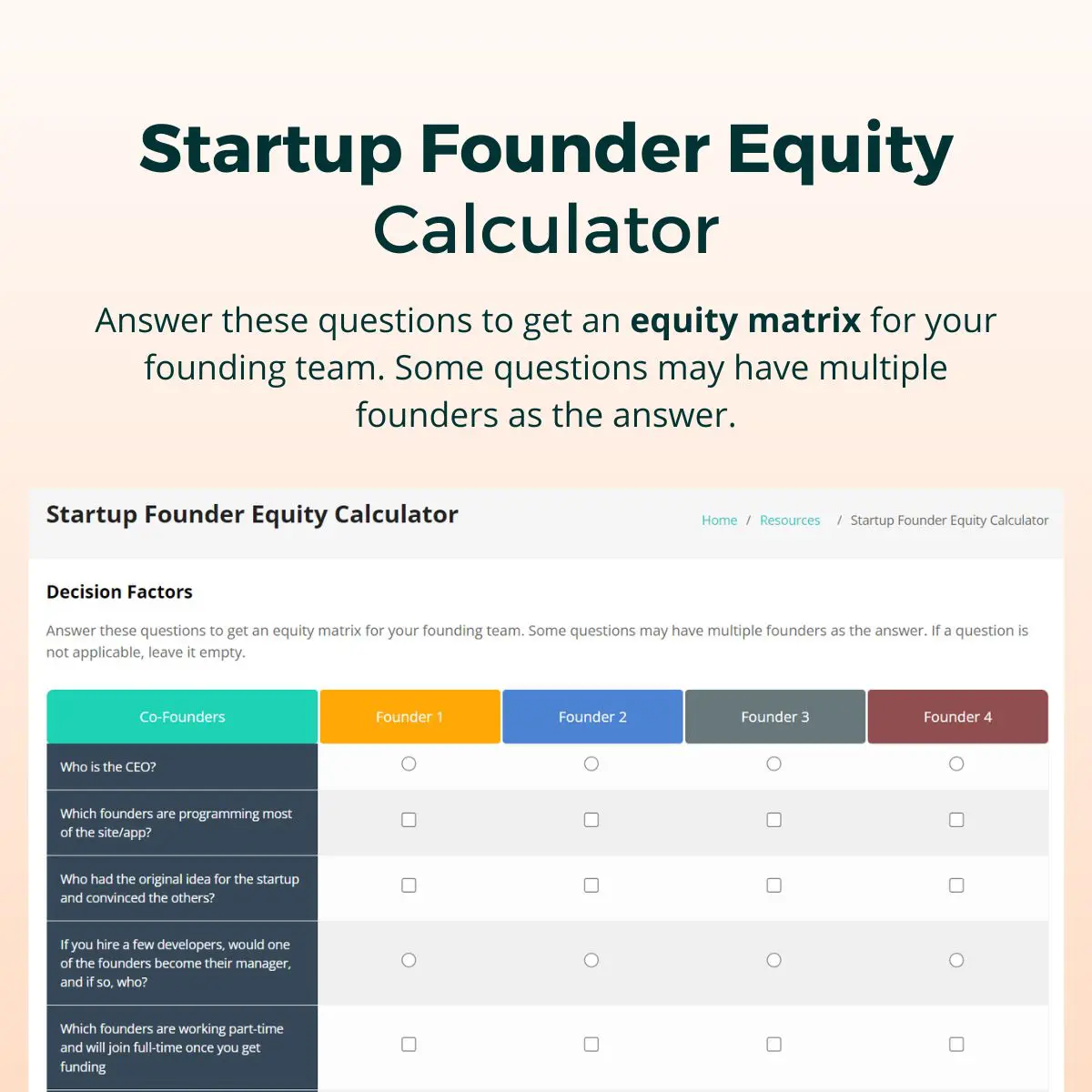
Use Codeventure’s Startup Equity Calculator Today!

