
How to Avoid Hiring a Bad Programmer for Your Startup?
The technology industry continues to dominate entrepreneurial opportunities worldwide. From artificial intelligence to virtual reality and advanced analytics, software-driven innovation is shaping the future of business.
Many aspiring founders recognize this opportunity and launch tech startups despite not having programming backgrounds. While business expertise, marketing skills, and leadership are valuable strengths, one major challenge remains:
How can non-technical entrepreneurs successfully build software products without technical knowledge?
The answer often begins with understanding how to hire the right development team.
Why Technology Startups Continue to Attract Entrepreneurs
Industry forecasts consistently highlight technology sectors as high-growth opportunities. Fields such as:
- Artificial Intelligence
- Virtual Reality
- Fraud Detection Software
- Biometric Security Systems
- Food Technology Analytics
- Drone Manufacturing
- Corporate Wellness Platforms
are heavily dependent on software development.
This trend explains why entrepreneurs from business schools, finance backgrounds, and marketing roles are increasingly entering the tech startup ecosystem; even without coding experience.
However, building a software company without technical expertise introduces significant risk.
The Challenge Non-Technical Founders Face
Most entrepreneurs excel at:
- Business strategy
- Sales and marketing
- Operations management
- Investor relations
But they may lack the ability to evaluate software quality during development.
Unlike physical products, software progress is difficult to measure visually. Founders often cannot verify whether the underlying code is scalable, secure, or maintainable until late in development, when time and investment have already been spent.
This creates a common fear among founders:
What if months of work and investor funding are wasted because the programmer wasn’t the right fit?
The Real Cost of Hiring the Wrong Programmer
Software development is often one of the largest early expenses for startups. Hiring mistakes can lead to:
- Missed product launch deadlines
- Poor application performance
- Security vulnerabilities
- Expensive redevelopment costs
- Loss of investor confidence
In highly competitive markets, delays can be fatal.
History has shown that startups with strong ideas can still fail if execution falls short. When competing products launch faster with better user experiences, users quickly migrate to superior alternatives.
Execution – not just innovation , determines startup success.
Why Evaluating Developers Is Difficult for Non-Technical Founders
Without coding knowledge, founders often rely on indirect hiring methods such as:
- Asking technical friends for recommendations
- Hiring freelance consultants to conduct interviews
- Reviewing open-source contributions
- Running technical tests designed by external developers
While these strategies help, they overlook a critical reality:
Building successful software rarely depends on a single programmer.
Software Development Is a Team Effort
Modern software products require multiple specialized roles, including:
- Product Managers
- System Architects
- Backend Engineers
- Frontend Developers
- UI/UX Designers
- QA Testers
- DevOps Engineers
- Project Managers
Even highly skilled “full-stack developers” typically specialize in only a few of these areas.
Expecting one individual to manage an entire product, from architecture to design to deployment; is a major risk for early-stage startups.
Many technical failures occur not because founders hired a bad developer, but because they relied on one person to perform the work of an entire team.
Why Development Agencies Are Often the Safer Choice
For non-technical entrepreneurs, partnering with a professional development agency can significantly reduce risk.
A reputable agency provides:
-> Specialized Expertise
Multiple professionals handle architecture, design, development, and testing.
-> Structured Development Processes
Agencies follow proven workflows, reducing chaos and missed deadlines.
-> Quality Assurance
Dedicated testing teams ensure product stability before launch.
-> Project Management Support
Clear communication, timelines, and accountability help founders track progress even without technical expertise.
Instead of depending on a single freelancer, founders gain access to a coordinated team focused on delivering a production-ready product.
Key Tips for Non-Technical Founders Hiring Developers
Before starting development, consider these best practices:
Define Product Requirements Clearly
Create detailed documentation outlining features, goals, and user experience expectations.
Start with an MVP
Build a Minimum Viable Product to validate your concept before large investments.
Focus on Communication
Choose developers who explain technical decisions in simple business language.
Evaluate Process, Not Just Skills
Strong workflows and collaboration matter more than individual coding talent.
Think Long-Term
Your development partner should support future scaling, updates, and maintenance.
The Smart Approach to Building a Tech Startup
Successful technology startups combine business vision with technical execution.
Non-technical founders don’t need to learn programming overnight, but they must build the right technical foundation by assembling the right team.
The safest path forward is often:
- Lead with business expertise
- Partner with experienced technical professionals
- Invest in collaborative development rather than individual dependency
Final Thoughts
Launching a tech startup without coding experience is entirely possible, and increasingly common. However, the biggest mistake founders make is assuming one programmer can handle every aspect of software development.
Great products are built by teams, not individuals.
By choosing the right development approach and working with experienced professionals, entrepreneurs can transform strong ideas into scalable, market-ready technology products.
Building a startup is hard — equity planning shouldn’t be.
Use our Equity Calculator to:
- Instantly calculate founder shares
- Simulate investment rounds
- Understand dilution before fundraising
- Create transparent equity splits
Start calculating your startup equity today.
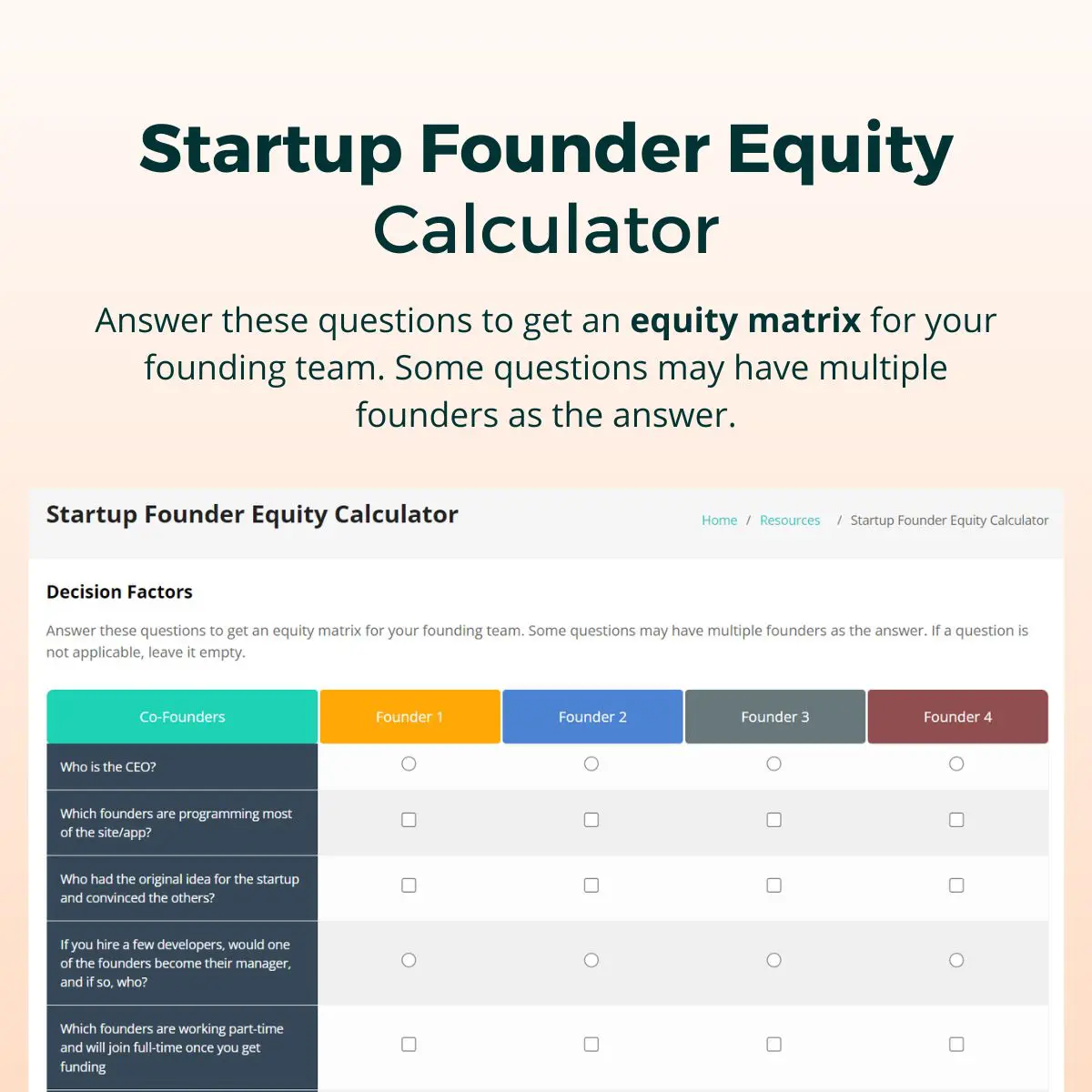
Use Codeventure’s Startup Equity Calculator Today!

