
How to Validate a Startup Idea Before Building Anything

Every year, thousands of startups fail, not because of bad technology, but because nobody actually needed the product. Many founders spend months building something before checking whether people truly want it.
Startup validation helps you test your idea before investing time, money, and effort. Instead of guessing, you learn from real users and real market signals.
Why Startup Idea Validation Matters
Building first and validating later is one of the biggest mistakes startups make.
Many founders invest months building products before confirming whether customers actually need them. Validation reverses this risk by helping you understand the market before committing time and money.
Validation allows you to:
- Confirm that the problem truly exists
- Understand real customer needs and expectations
- Avoid unnecessary development costs
- Reduce business and market risk
- Build a product people are genuinely willing to pay for
The goal is simple: prove demand before you build the product.
1. Understanding the Problem First
Many founders get excited about an idea and immediately start building a product. The excitement of creating something new often pushes them into development too quickly. They assume that because the idea sounds innovative or useful to them, others will automatically want it too. As a result, time, money, and effort are invested before confirming whether customers actually need the solution.
But the truth is, an idea alone does not guarantee success. A startup does not succeed because the product is clever or technically impressive, it succeeds because it solves a meaningful problem for real people. What truly matters is whether customers genuinely experience the pain point you are trying to address and are actively looking for a solution.
Before building anything, take time to understand the problem deeply. Talk to real people who might face this issue in their daily lives. Ask open questions and listen carefully to their experiences. You may discover that the problem is different from what you initially assumed, or sometimes even bigger than you imagined.
2. Defining Your Target Audience
Once you confirm that a real problem exists, the next step is understanding who actually experiences it. Your product is not meant for everyone, and that is a good thing. When you clearly define your target users, you can focus your time and energy on solving the problem for people who truly need your solution.
Start by creating simple user personas. These are basic descriptions of the people who might use your product. Think about their profession, daily routines, goals, and challenges. At this stage, you do not need detailed research. Even a rough picture of your potential users helps guide product decisions and prevents you from building features based on assumptions.
Next, decide whether your idea should begin with a niche audience or a broad market. Most successful startups start by serving a small, clearly defined group rather than trying to attract everyone at once. Focusing on a niche allows you to deeply understand user needs and build a solution that fits them well. Once the product works for this group, expanding to a larger audience becomes much easier.
After defining your audience, identify your early adopters. These are users who are willing to try new products even when they are still evolving. Early adopters play a critical role because they provide honest feedback, highlight real problems, and help you improve the product before scaling. Many startups succeed because they learn quickly from these first users.
Finally, spend time understanding your users’ pain points and behavior. Observe how they currently solve the problem, what frustrations they face, and what they expect from a better solution. When you understand not only who your users are but also how they think and act, you move closer to building a product people genuinely want to use.
3. Market Research Basics
After defining your target audience, the next step is understanding the market you are entering. Market research helps you see whether your startup idea has real growth potential and long-term opportunity.
Begin by analyzing the market size. This includes understanding the total opportunity available and how much of it your startup can realistically capture. Looking at the overall market helps you understand whether the idea can grow into a sustainable business rather than remaining a small solution for a limited group.
Next, observe current market trends and demand signals. Check if people are actively discussing the problem, searching for solutions online, or adopting similar products. Rising interest, industry growth, and increasing conversations around a problem often indicate strong demand.
After that, study existing competitors and alternative solutions. Competitors are not a bad sign – they actually prove that the problem already exists. Look at how these solutions work, what features they offer, and how users respond to them.
Finally, identify gaps in the market. Pay attention to areas where users still feel frustrated. These gaps represent opportunities for innovation and differentiation. When you understand where current solutions fall short, you can position your startup to deliver something more valuable and meaningful to users.
4. Competitor Analysis
Once you understand the market, the next step is learning from the businesses already operating in that space. Competitor analysis helps you understand how the problem is currently being solved and where your startup can stand out.
Start by identifying the difference between direct and indirect competitors. Direct competitors offer products or services similar to your idea, targeting the same users. Indirect competitors may not look similar at first, but they solve the same problem in a different way. Understanding both types gives you a complete picture of the competitive landscape.
Next, study what competitors are doing well and where they are making mistakes. Look at their product features, pricing models, marketing approach, and customer experience. This helps you recognize their strengths while also identifying weaknesses you can improve upon.
After that, focus on finding underserved segments. These are groups of users whose needs are not fully satisfied by existing solutions. Sometimes competitors focus only on mainstream customers, leaving smaller but valuable audiences ignored. These gaps can become strong opportunities for your startup.
Finally, explore competitor reviews and customer feedback. Read user comments, ratings, and discussions to understand real experiences. Pay attention to repeated complaints, missing features, and user expectations. These insights reveal what people truly want and guide you toward building a better and more meaningful solution.
5. Customer Discovery (Talking to Users)
After studying the market and competitors, the next critical step is speaking directly with potential users. This phase, known as customer discovery, helps founders understand problems from the customer’s perspective instead of relying on assumptions. The objective is not to validate your idea immediately, but to learn how people actually experience the problem in real life.
Begin by identifying individuals who genuinely face the issue you want to solve. Reach out with a simple message explaining that you are conducting research and are not trying to sell anything. Short conversations of 15–30 minutes are usually enough. Setting the right expectation is important; people tend to be more honest when they know the discussion is purely exploratory.
During the interview, focus on problem-based conversations rather than pitching your solution. Ask participants to describe their experiences, routines, and frustrations. Encourage them to talk about specific past situations instead of hypothetical opinions. Questions such as “Tell me about the last time you faced this challenge” or “How are you handling this today?” reveal real behavior, while questions like “Would you use my product?” often lead to polite but unreliable responses.
Use simple, open-ended, and unbiased questions. Allow users to speak freely and avoid interrupting or guiding them toward answers you hope to hear. If a participant gives a short response, follow up with questions like “Why was that difficult?” or “What happened next?” The goal is to uncover the root problem, not confirm your assumptions.
Pay close attention to how users describe their struggles. The words they use, the emotions they express, and the workarounds they mention are powerful signals. Take notes immediately after each conversation and look for repeating patterns across interviews. When multiple people independently describe the same frustration, frequency of the problem, or inefficiency in existing solutions, you begin to see real validation emerge.
Approval in customer discovery does not come from users saying they like your idea. True validation happens when users clearly acknowledge the problem, explain how it affects them, and show willingness to invest time, money, or effort to solve it. If people already use temporary fixes, pay for alternatives, or express urgency around the issue, it indicates strong demand.
Customer discovery is ultimately a learning process, not a persuasion exercise. Instead of trying to prove your idea right, focus on discovering the truth about customer needs. The more objectively you listen and analyze feedback, the stronger your foundation will be when you finally begin building your product.
6. Testing Problem-Solution Fit
Once you have spoken to users and understood their challenges, the next step is to check whether your idea truly matches the problem. This stage helps you confirm that your solution is meaningful and not just interesting in theory.
Start by evaluating whether the problem is actually worth solving. Some problems may sound important but do not affect users strongly enough for them to seek a solution. A strong startup idea usually focuses on a problem that causes real frustration or difficulty in people’s lives.
Next, observe whether users are already paying for existing solutions. When people spend money or invest effort to solve a problem, it clearly shows that the issue has real value. Even imperfect or temporary solutions indicate strong demand.
After that, measure the urgency of the problem. Try to understand how quickly users need a solution. Problems that require immediate attention often lead to faster adoption and stronger user interest compared to problems that can easily be postponed.
Finally, check whether users are willing to switch from their current solution. People usually change only when a new option offers clear improvement or convenience. If users show interest in moving away from what they currently use, it signals that your idea has genuine potential in the market.
Testing problems–solution fit helps ensure that you are not just building a product, but creating a solution people are ready to accept and use.
7. Landing Page Validation
After confirming that your idea solves a meaningful problem, the next step is to test real user interest without building the full product. A landing page is one of the simplest and fastest ways to validate your startup idea.
Start by creating a simple landing page that clearly explains your idea and the value it offers to users. Focus on explaining the problem, how your solution helps, and why it matters. The goal is not to make it perfect but to communicate your idea in a clear and understandable way.
Next, run a waitlist or signup test. Invite visitors to join early access, subscribe for updates, or reserve a spot. When people willingly share their email or sign up, it shows genuine interest rather than casual curiosity.
After that, measure the conversion rate. This means checking how many visitors actually sign up compared to how many visit the page. A strong conversion rate indicates that people understand the idea and feel interested enough to take action.
Finally, experiment with A/B testing by trying different headlines, messages, or value propositions. Small changes in wording or presentation can significantly affect user response. Testing multiple versions helps you discover which message connects best with your audience.
Landing page validation allows you to test demand quickly and cheaply, helping you move forward with confidence before investing time in development.
8. Fake Door / Smoke Tests
Before investing time and resources into building a product, it is useful to test whether people are truly interested in your idea. Fake door or smoke tests help you validate demand by observing real user behavior rather than relying only on opinions.
Start by testing demand without actually creating the product. Present your idea as if it already exists and see how users respond. This could be a landing page, a feature announcement, or an early access offer that allows you to measure genuine interest.
Next, run simple advertisements to attract potential users. These ads help you reach your target audience quickly and understand whether people are curious enough to learn more about your solution. The goal is not large – scale marketing but learning how users react to your idea.
After that, measure important actions such as clicks, signups, and user intent. These signals show whether people are just viewing your idea or actually taking steps that indicate real interest. Actions speak louder than positive comments.
Finally, compare the cost per lead with the level of interest you receive. If acquiring interested users is affordable and sustainable, it suggests strong market potential. If the cost is too high compared to user response, it may indicate that the idea or positioning needs improvement.
Smoke tests allow founders to validate demand quickly, helping them make smarter decisions before committing to product development.
9. Minimum Viable Product (MVP) Strategy
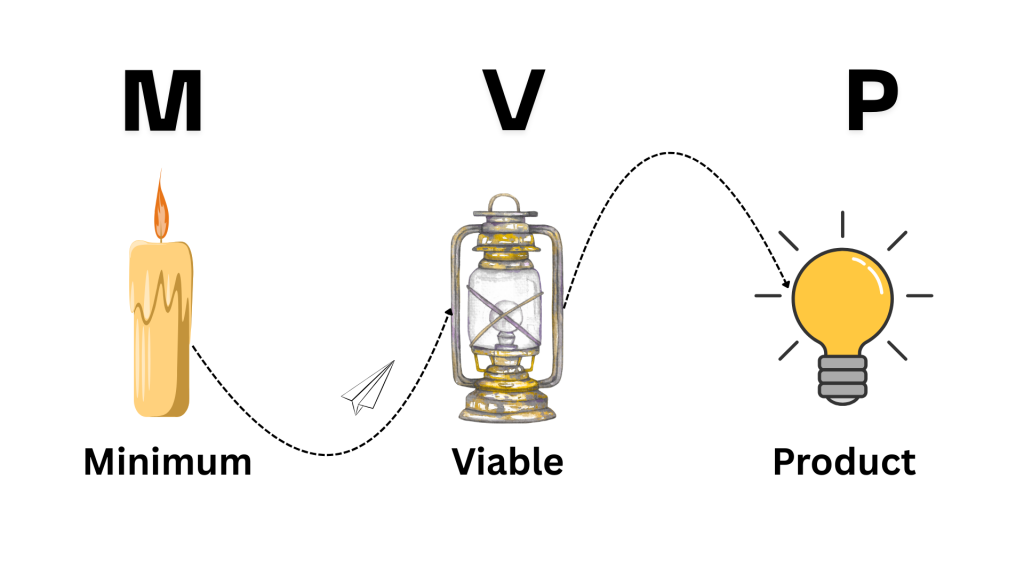
After validating demand and confirming user interest, the next step is building a Minimum Viable Product, commonly known as an MVP. The purpose of an MVP is not to launch a perfect product but to start learning from real users as quickly as possible.
First, understand what an MVP truly means. An MVP is not a complete product filled with advanced features. It is the simplest version of your solution that solves one core problem for users. The goal is to test usability, gather feedback, and validate assumptions without spending excessive time or resources.
There are different types of MVPs you can choose from depending on your idea. A no-code MVP uses simple tools to create a working version without heavy development. A manual or concierge MVP delivers the service manually behind the scenes while appearing automated to users. A prototype MVP focuses on demonstrating how the product works without full functionality. Each approach allows you to learn before scaling.
Choosing the right MVP approach depends on your resources, timeline, and the problem you are solving. The best MVP is the one that helps you test your biggest assumptions quickly while minimizing risk.
Most importantly, keep the MVP scope minimal. Avoid adding extra features or trying to impress users with complexity. Focus only on the core value your product delivers. A simple MVP launched early provides more learning than a perfect product launched too late.
An effective MVP helps you move from validation to real-world learning, bringing you closer to building a product that users genuinely want.
10. Pre-Sales and Early Monetization
After building an MVP, the next important step is validating whether users are willing to pay for your solution. Interest and signups are positive signals, but real validation happens when customers are ready to spend money.
Start by testing willingness to pay as early as possible. Instead of waiting for a finished product, introduce pricing early and observe how users respond. When people show readiness to pay, it confirms that the problem is valuable enough for them to invest in a solution.
One effective approach is using pre-order models. You can allow users to reserve early access or purchase the product before full launch. Pre-orders help measure real demand while also generating initial revenue and confidence in your idea.
Another method is offering paid beta testing. Invite early users to try the product while it is still improving, and charge a small fee for access. Users who pay during the early stage often provide meaningful feedback because they genuinely want the product to succeed.
Finally, use this stage to validate pricing expectations. Experiment with different pricing levels and observe how users react. Understanding what customers are comfortable paying helps you position your product correctly and build a sustainable business model.
Pre-sales and early monetization transform validation into real business proof, showing that your startup is not only interesting but also economically viable.
11. Measuring Validation Metrics
Once you start testing your idea with real users, it becomes important to measure the right signals. Validation is not only about collecting signups or traffic, but about understanding whether users truly find value in your solution.
Begin by tracking conversion rates. This shows how many people move from interest to action, such as signing up, joining a waitlist, or requesting access. Conversion benchmarks help you understand whether your messaging and value proposition are strong enough to attract users.
Next, compare signups with engagement quality. A large number of signups may look impressive, but real validation comes from users who actively interact, respond to emails, explore features, or show continued interest. Quality engagement is often more meaningful than high numbers alone.
After that, observe early retention indicators. Even during early tests or MVP stages, notice whether users come back after their first interaction. Returning users signal that the problem is important and that your solution provides ongoing value.
Finally, focus on feedback quality rather than feedback quantity. A few detailed insights from genuinely interested users can be far more useful than many vague opinions. Thoughtful feedback helps you understand what works, what needs improvement, and where to focus next.
Measuring the right validation metrics allows you to move forward based on real evidence instead of assumptions, helping you build a startup with stronger foundations.
12. Interpreting Results & Making Decisions
Start by deciding whether to pivot, persevere, or stop the idea. If users strongly respond and show real interest, it may be time to continue improving the concept. If feedback reveals a different problem or audience than expected, a pivot can help refine the direction. In some cases, weak signals may indicate that the idea is not worth pursuing, and stopping early can save valuable time and resources.
Next, be careful about false positives. Positive comments, compliments, or curiosity do not always mean real demand. People may say they like an idea but never actually use or pay for it. Focus on real actions such as signups, usage, or payments rather than opinions alone.
It is also important to understand the difference between signal and noise. Signals are consistent patterns that appear repeatedly across users, such as common pain points or repeated requests. Noise refers to random opinions or isolated feedback that may not represent the broader market. Strong decisions come from recognizing meaningful patterns instead of reacting to every individual comment.
Finally, continue iterating before moving into full development. Use insights from validation to improve your messaging, features, or target audience step by step. Small adjustments and repeated testing help you refine the idea until you gain strong confidence in its potential.
Interpreting results correctly ensures that your startup moves forward with clarity, reducing risk and increasing the chances of building something that truly succeeds.
Conclusion: Validate First, Build Smart
Building a startup is exciting, but success rarely comes from ideas alone. The strongest startups are not built on assumptions – they are built on evidence, learning, and real user understanding. Validation helps founders move from guessing to knowing.
Throughout this process, the goal is simple: learn before you build. By understanding the problem deeply, identifying the right audience, studying the market, talking to users, and testing demand early, you reduce uncertainty step by step. Each validation stage acts as a safety check that prevents wasted effort and guides smarter decisions.
Startup validation is not about proving your idea is perfect. It is about discovering what works, what does not, and how your idea should evolve. Sometimes validation confirms your direction, sometimes it forces a pivot, and sometimes it saves you from building something the market does not need. All three outcomes are valuable.
Remember, successful founders do not fall in love with their product – they fall in love with solving real problems. When you focus on learning from users, testing assumptions, and iterating continuously, you increase the chances of building a product people truly want and are willing to pay for.
Before writing a single line of code or investing heavily in development, take time to validate. Because the smartest startup strategy is not building faster – it is building the right thing.
Ready to Build Your Business Plan?
Transform your idea into a structured, investor-ready business plan that clearly defines your vision, market opportunity, strategy, and growth roadmap. Start creating your business plan today and turn your concept into a scalable, actionable business.
Got a business idea but unsure where to start?
Turn your vision into a structured business plan investors can understand!