
Product Market Fit: How to Achieve, Measure & Know You Have It
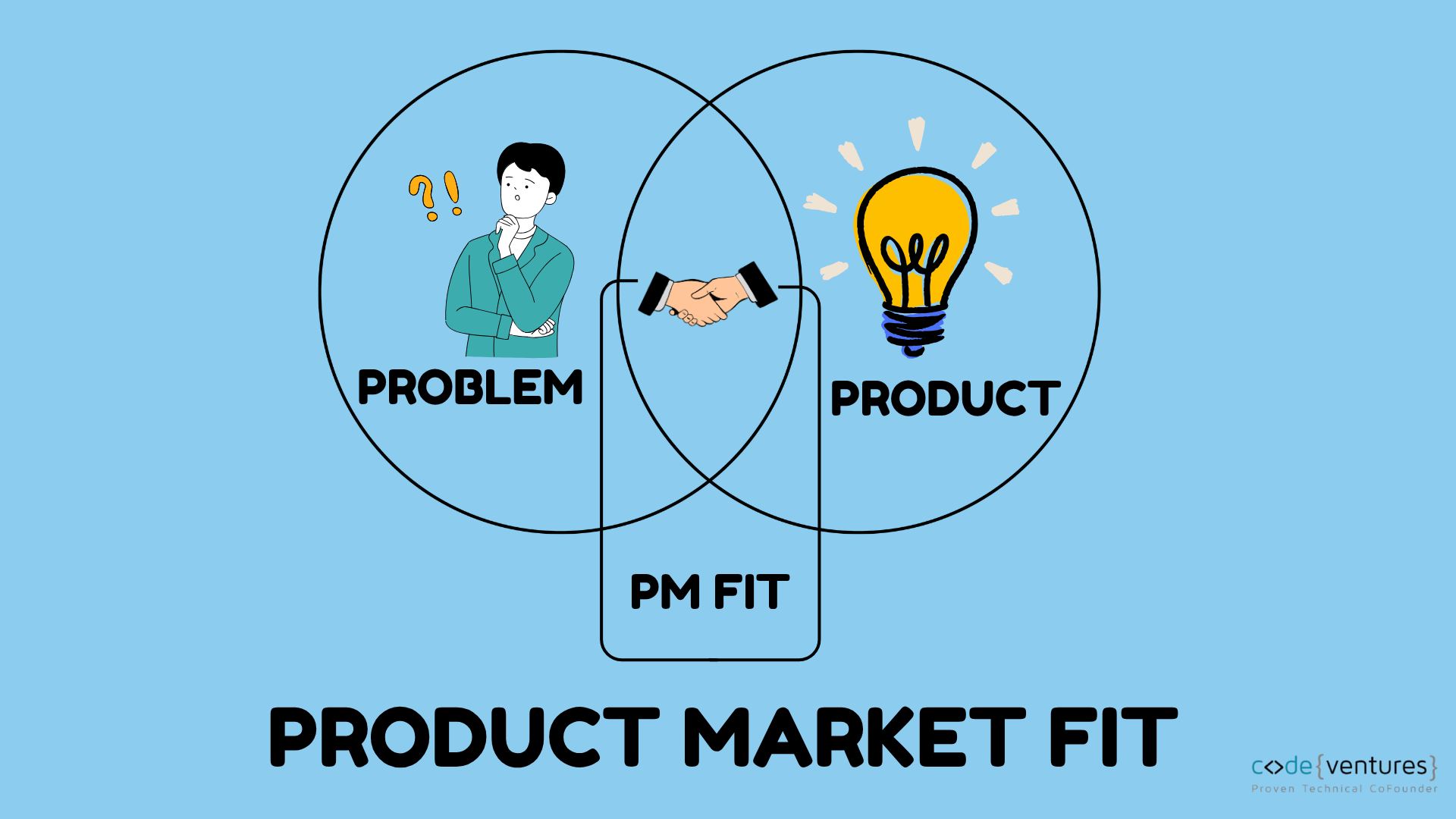
Many startups launch products with high hopes, but not all of them succeed. They create things that people don’t genuinely need or want, which is one of the main causes. Product-market fit, or PMF, becomes crucial in this situation.
Product-market fit is the state in which a particular group of customers is willing to use and pay for your product because it addresses a real need for them. Achieving product-market fit makes it simpler for a company to draw in clients, increase sales, and grow profitably.
Achieving product-market fit is not always simple, though. Many companies have trouble figuring out who their target market is, what their customers need, or how to improve their products based on feedback. Businesses frequently invest time and resources in marketing and development without achieving the intended outcomes when there is a lack of product-market fit.
We’ll go over what product-market fit is, why it’s important, how to get it, and the main indicators you can use to gauge it in this tutorial. Additionally, you will learn how to spot the indicators that your product is ready for expansion and is satisfying consumer demand.
What Is Product-Market Fit?
Definition of Product-Market Fit
When a product effectively satisfies the needs of its target market, it is said to have achieved product-market fit (PMF). It simply implies that you have created something that people are willing to pay for, genuinely want, and use on a regular basis.
Marc Andreessen, co-founder of Andreessen Horowitz, defined product-market fit (PMF) as “being in a good market with a product that can satisfy that market”. He famously described it as the singular most critical factor in startup success, noting that the market is pulling the product out of the startup’s hands.
PMF can be conceptualized as follows: your product addresses a genuine issue, and users find it valuable enough to continue using it. Customer demand increases organically as product-market fit is attained, allowing the company to concentrate on scaling.
Why Product-Market Fit Matters
One of the most crucial turning points for any startup or company is reaching product-market fit. Even the greatest marketing initiatives or significant financial outlays might not result in long-term success without it.
Faster Growth: Customers are more inclined to suggest your product to others when they see genuine value in it. This fosters organic growth and makes it easier for your company to draw in new customers.
Improved Customer Retention: Consumers who find value in your product are more inclined to stick with it over time. A more steady client base and steady income are the results of higher retention rates.
Easier Fundraising: Investors require proof that a product is in demand. Because they have demonstrated that consumers demand their solution, companies that have achieved product-market fit frequently have an easier time obtaining finance.
Effective Marketing and Sales: Marketing and sales initiatives are more successful when your product fulfills consumer demands. You are contacting an audience that is already aware of the issue and seeking a solution, rather than persuading them of the necessity of your product.
Signs Your Business Has Achieved Product-Market Fit
Strong Customer Demand
Because your product addresses a genuine issue, customers actively seek it out. You don’t have to rely solely on paid promotion to observe consistent engagement from new users.
High Customer Retention Rates
Instead of quitting after a short while, customers stick with your product over time. This demonstrates that they continue to value what you have to give.
Positive Word-of-Mouth Referrals
Satisfied consumers tell friends, coworkers, and other companies about your product. Referrals are frequently a reliable sign that your product satisfies consumer needs.
Consistent Revenue Growth
As more people use your product and current consumers stick with you, sales and revenue keep rising gradually.
Customers Would Be Disappointed Without Your Product
If a large number of consumers express how disappointed they would be if your product disappeared, it is a clear indication that they now value your solution.
Growing Customer Engagement
Customers frequently engage with your product and utilize its main functionalities. A high level of engagement frequently means that users find the product helpful in their day-to-day activities.
Shorter Sales Cycles
Prospects immediately grasp the worth of your product and decide to buy it. This frequently occurs when the product effectively addresses a known issue.
Increasing Customer Feedback and Feature Requests
Because they are passionate about the product and want it to get better, customers actively offer suggestions and ask for additional features.
Lower Customer Churn
Just a tiny portion of consumers discontinue using your goods. Customers who are satisfied and continue to receive value are shown by low churn rates.
Repeat Purchases or Upgrades
Consumers are prepared to upgrade to higher plans, buy extra services, or renew subscriptions. This shows that you have faith in your company and product.
Strong Market Reputation
The industry or target market starts to recognize your brand. Reviews, suggestions, and online conversations raise awareness of your product.
Why Many Startups Fail to Reach Product-Market Fit
One of the main obstacles facing businesses is achieving product-market fit. Many companies begin with a fantastic concept, but not all of them are able to produce a product that consumers genuinely need and appreciate. Failure frequently results from errors made throughout the product development process rather than from inadequate technology or a lack of effort. These are a few typical causes of startups’ difficulties achieving product-market fit.
Building Without Validating Demand
Developing a product before determining whether there is a true market for it is one of the most frequent blunders made by companies. It’s possible for founders to spend months creating products without consulting potential users because they believe they know what customers want. Even a well-designed solution may not succeed if the problem is not significant enough for consumers.
Targeting the Wrong Audience
If a product is sold to the incorrect audience, it may be able to answer a true problem but still fail. Instead of concentrating on a certain target market, many firms attempt to appeal to everyone. Businesses frequently find it difficult to draw in users and successfully convey the benefits of their product if they don’t have a clear picture of who their ideal clients are.
Focusing on Features Instead of Problems
Some firms spend too much time developing new features rather than addressing the main issues that consumers encounter. More features don’t always translate into greater value. Products that are successful concentrate on meeting a certain consumer need and doing it extraordinarily well.
Measuring the Wrong Metrics
A lot of companies concentrate on vanity metrics like social media followers, app downloads, and website views. Even though these figures might seem impressive, product-market fit is not necessarily indicated by them. A clearer picture of whether or not customers genuinely value the product is provided by metrics like customer retention, engagement, and repeat purchases.
Lack of Continuous Improvement
Market conditions and customer demands evolve over time. Startups risk becoming obsolete if they cease paying attention to their clients or don’t change. Maintaining long-term success involves ongoing learning, testing, and development in order to achieve product-market fit.
Ignoring Customer Feedback
Customer feedback is essential for improving a product and ensuring it meets user needs. Some startups become too attached to their original vision and ignore suggestions, complaints, or usability issues raised by customers. As a result, they miss opportunities to make meaningful improvements that could help them achieve product-market fit faster.
Scaling Too Early
Many startups focus on growth before they have proven that customers truly want their product. They invest heavily in marketing, hire larger teams, or expand operations too quickly. While growth is important, scaling before achieving product-market fit can lead to wasted resources and increased costs. It’s often better to refine the product and build a loyal customer base before accelerating growth.
How to Achieve Product-Market Fit
There is no single formula for achieving product-market fit, but successful companies tend to follow a similar path. The process involves understanding customer problems, building a solution, testing assumptions, and continuously improving based on feedback. Here’s a practical roadmap you can follow.
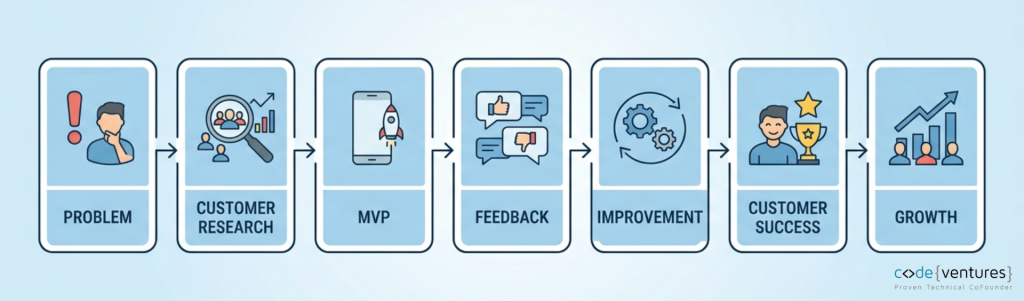
Step 1: Start With the Problem, Not the Product
- Why solving a real problem matters
- Conduct market research
- Identify customer pain points
- Validate whether the problem is important enough to solve
Pro Tip: If customers aren’t actively looking for a solution, achieving product-market fit will be difficult.
Step 2: Understand Exactly Who You’re Building For
- Define your Ideal Customer Profile (ICP)
- Demographics
- Behavior patterns
- Goals and frustrations
- Buying motivations
Example: A project management tool for freelancers will have different needs than one designed for enterprise teams.
Step 3: Build the Simplest Solution That Works
- What is an MVP?
- Focus on core features
- Avoid feature overload
- Launch quickly to gather insights
Key Question: What is the smallest version of your product that solves the problem?
Step 4: Get Real Customer Feedback
- Surveys
- Customer interviews
- User testing
- Support conversations
- Usage analytics
Remember: Feedback is more valuable than assumptions.
Step 5: Improve Based on What You Learn
- Analyze feedback
- Prioritize improvements
- Remove unnecessary features
- Test changes continuously
Goal: Make the product more valuable with every iteration.
Step 6: Turn Users Into Successful Customers
- Smooth onboarding process
- Helpful support
- Educational resources
- Customer engagement strategies
Why it matters: Customers who achieve results with your product are more likely to stay, upgrade, and recommend it.
The Product-Market Fit Cycle
Common Mistakes at Each Stage
| Step | Common Mistake |
| Problem Discovery | Solving a problem nobody cares about |
| ICP Definition | Trying to target everyone |
| MVP Development | Building too many features |
| Feedback Collection | Ignoring customer input |
| Iteration | Making changes without data |
| Customer Success | Focusing only on acquiring new users |
Achieving product-market fit is rarely a one-time event. It’s an ongoing process of understanding customers, solving real problems, and continuously improving your product. The companies that succeed are the ones that listen, adapt, and focus relentlessly on customer value.
How to Measure Product-Market Fit
Achieving product-market fit is important, but how do you know when you’ve actually reached it? While there is no single metric that can confirm product-market fit, several indicators can help you understand whether your product is meeting customer needs and creating real value. By tracking the right metrics, businesses can make informed decisions and identify areas for improvement.
The Sean Ellis Test (The 40% Test)
One of the most widely used methods for measuring product-market fit is the Sean Ellis Test. It involves asking customers a simple question:
“How would you feel if you could no longer use this product?”
The possible responses are:
- Very disappointed
- Somewhat disappointed
- Not disappointed
- I no longer use this product
According to Sean Ellis, if 40% or more of respondents say they would be “very disappointed” if the product disappeared, it is a strong indication that the business has achieved product-market fit.
This test helps companies understand how important their product is to users and whether it has become a valuable part of their daily workflow or routine.
Customer Retention Rate
Retention measures how many customers continue using your product over time. A high retention rate indicates that customers find ongoing value in your solution and are willing to stay.
If customers frequently stop using your product after signing up, it may suggest that the product is not fully meeting their expectations. Tracking retention over weeks, months, or years can help you identify whether customer satisfaction is improving.
Net Promoter Score (NPS)
Net Promoter Score (NPS) is a popular metric used to measure customer satisfaction and loyalty. It is based on a simple question:
“How likely are you to recommend our product to a friend or colleague?”
Customers rate their answer on a scale from 0 to 10. Now let’s dissect those:
Promoters (9 to 10): Devoted fans who will probably tell others about your company and assist in bringing in new clients.
Passives (7 to 8): These consumers are content but not loyal to your company. If a better offer is made, they might move to a rival.
Detractors (0 to 6): These are disgruntled clients who could harm your company’s growth and reputation through unfavorable word-of-mouth or public reviews.
A higher NPS generally indicates that users are satisfied with the product and willing to recommend it to others. Strong recommendations often lead to organic growth through word-of-mouth referrals.
Customer Acquisition Cost (CAC) vs. Lifetime Value (LTV)
Another way to assess product-market fit is by comparing Customer Acquisition Cost (CAC) and Customer Lifetime Value (LTV).
- CAC measures how much it costs to acquire a new customer.
- LTV measures the total revenue a customer generates throughout their relationship with your business.
When LTV is significantly higher than CAC, it suggests that customers see enough value in the product to continue using it, creating a sustainable business model. If acquisition costs are higher than customer value, the company may need to improve its product or retention strategy.
Product Usage Metrics
Customer behavior often reveals more than surveys alone. Product usage metrics help businesses understand how customers interact with their product and whether key features are delivering value.
Some important metrics to monitor include:
-> Active Users
The number of users who regularly engage with your product daily, weekly, or monthly. Consistent usage is often a sign that customers rely on the product.
-> Engagement Rates
Engagement measures how frequently users interact with features, content, or services. Higher engagement levels typically indicate stronger customer interest and satisfaction.
-> Feature Adoption
Feature adoption shows how many users are actively using specific features within the product. If customers consistently use your core features, it suggests that the product is solving an important problem.
-> Looking at the Bigger Picture
No single metric can fully determine whether you’ve achieved product-market fit. Instead, businesses should evaluate multiple indicators together, including customer feedback, retention, engagement, referrals, and revenue growth. When customers continue using your product, recommend it to others, and would be disappointed if it disappeared, you are likely moving closer to true product-market fit.
Key Metrics That Indicate Product-Market Fit
| Metric | What It Measures |
| Retention Rate | Customer loyalty |
| Churn Rate | Customer loss |
| NPS Score | Customer advocacy |
| Active Users | Product engagement |
| Revenue Growth | Market demand |
| Referral Rate | Word-of-mouth growth |
Real-World Examples of Product-Market Fit
Understanding product-market fit becomes easier when we look at companies that successfully achieved it. These businesses identified real customer problems, created effective solutions, and continuously improved their products based on user needs. Here are three well-known examples.
Airbnb: Solving Accommodation Challenges
In its early days, Airbnb noticed a common problem faced by travelers: hotels were often expensive, fully booked, or lacked the local experience many people wanted. At the same time, homeowners had unused space that could generate extra income.
Airbnb created a platform that connected travelers with hosts willing to rent out their homes, apartments, or spare rooms. The idea solved problems for both groups and quickly gained popularity. As more people used the platform and recommended it to others, Airbnb demonstrated strong product-market fit.
Today, Airbnb serves millions of users worldwide because it successfully addressed a real market need with a simple and convenient solution.
Slack: Addressing Workplace Communication Problems
Before Slack, many teams relied heavily on email for internal communication. This often led to long email chains, missed messages, and reduced productivity.
Slack introduced a messaging platform designed specifically for workplace collaboration. Teams could organize conversations into channels, share files, and communicate in real time. The platform made workplace communication faster and more efficient.
As businesses adopted Slack, employee engagement increased and collaboration improved. The strong demand and rapid user growth showed that Slack had found a product that met a significant market need.
Zoom: Delivering Reliable Video Conferencing
Video conferencing tools existed before Zoom, but many users found them difficult to use or unreliable. Frequent connection issues, complicated interfaces, and poor video quality created frustration.
Zoom focused on providing a simple, user-friendly, and dependable video conferencing experience. Users could join meetings quickly, and the platform offered consistent performance even with large groups.
When remote work and virtual meetings became more common, Zoom’s ease of use helped it grow rapidly. Its ability to solve a widespread communication challenge made it a clear example of product-market fit.
Lessons from These Success Stories
Although Airbnb, Slack, and Zoom operate in different industries, they share several important characteristics that contributed to their success:
They Solved Real Problems
Each company focused on addressing a genuine customer pain point rather than creating a solution in search of a problem.
They Listened to Customer Feedback
These businesses continuously improved their products based on user needs and feedback, helping them stay relevant and competitive.
They Kept the User Experience Simple
Customers adopted their products because they were easy to understand and use. Simplicity played a major role in driving growth.
They Focused on Customer Value
Rather than adding unnecessary features, they concentrated on delivering value through their core offering.
They Adapted as the Market Evolved
Customers need to change over time. Successful companies continue refining their products to maintain product-market fit as markets grow and evolve.
These examples show that product-market fit is not about having the most advanced technology or the largest budget. It is about understanding customer needs, solving meaningful problems, and consistently delivering value.
Common Mistakes to Avoid
Achieving product-market fit requires continuous learning, testing, and improvement. However, many startups make avoidable mistakes that slow down progress or prevent them from reaching product-market fit altogether. Being aware of these pitfalls can help businesses make better decisions and improve their chances of success.
Scaling Before Product-Market Fit
Many startups invest heavily in marketing, hiring, or expansion before proving that customers truly want their product. Scaling too early can lead to wasted resources and make it harder to identify and fix product issues.
Ignoring Negative Feedback
Negative feedback can be uncomfortable, but it often provides valuable insights into what customers need. Businesses that ignore complaints or suggestions may miss opportunities to improve their product and better serve their target audience.
Chasing Too Many Features
Adding more features does not always make a product better. Trying to satisfy every customer request can result in a complicated product that loses focus. Successful businesses prioritize features that solve their customers’ most important problems.
Focusing on Vanity Metrics
Metrics such as website traffic, social media followers, or app downloads may look impressive, but they do not always indicate real customer value. Instead, focus on metrics like retention, engagement, customer satisfaction, and revenue growth.
Trying to Target Everyone
A common mistake is attempting to appeal to a broad audience. Products that try to serve everyone often struggle to meet the specific needs of any particular group. Defining a clear target audience helps businesses create more effective solutions.
Building Based on Assumptions
Many founders assume they know what customers want without conducting research or validating their ideas. Decisions based on assumptions rather than customer insights can lead to products that fail to gain traction.
Neglecting Customer Onboarding
Even a great product can struggle if users find it difficult to get started. A poor onboarding experience may cause customers to leave before they fully understand the product’s value.
Failing to Differentiate from Competitors
If customers cannot clearly see how your product is different or better than existing alternatives, they may have little reason to switch. Businesses should communicate their unique value proposition clearly.
Not Iterating Quickly Enough
Customer needs and market conditions can change rapidly. Companies that fail to test, learn, and improve their product regularly may fall behind competitors and lose relevance.
Overlooking Customer Retention
Many startups focus heavily on acquiring new customers while paying little attention to keeping existing ones. Strong retention is often a better indicator of product-market fit than rapid customer acquisition.
Ignoring Market Changes
Markets evolve over time, and customer expectations change. Businesses that fail to adapt may lose their product-market fit even if they once had it. Continuous monitoring and improvement are essential for long-term success.
What Happens After Achieving Product-Market Fit?
Although it is a significant milestone, achieving product-market fit is not the end goal. It indicates that your product is fulfilling a genuine market demand and providing clients with value. Businesses can move from validation to growth after product-market fit is attained. The following phase entails growing your clientele, enhancing the product, and creating a long-lasting company.
Scaling Marketing Efforts
After achieving product-market fit, businesses can invest more confidently in marketing. Since the product has already proven its value, marketing efforts are more likely to generate positive results.
Companies can explore:
- Content marketing
- Search engine optimization (SEO)
- Social media campaigns
- Paid advertising
- Partnership and referral programs
The goal is to reach more potential customers while maintaining a consistent brand message and customer experience.
Expanding Product Features
Even after product-market fit is achieved, customer feedback is still crucial. Companies can improve the product and offer new features that bring value by using insights from current users.
But growth needs to be planned. Instead than adding needless complexity, new features should enhance the product’s core value and satisfy customer needs.
Entering New Markets
Once a business has established success with its initial audience, it may explore new opportunities for growth. This could include:
- Targeting new customer segments
- Expanding into different industries
- Launching in new geographic regions
- Offering solutions for additional use cases
Before entering a new market, it is important to conduct research and validate demand to ensure the product remains relevant.
Building Long-Term Growth Strategies
Sustainable growth requires more than customer acquisition. Businesses must focus on long-term planning and continuous improvement.
Key growth strategies may include:
- Improving customer retention
- Strengthening customer relationships
- Increasing customer lifetime value
- Investing in product innovation
- Building a scalable business model
Companies that continue listening to customers and adapting to market changes are more likely to maintain their competitive advantage over time.
Maintaining Product-Market Fit
It’s crucial to keep in mind that product-market fit is temporary. The market, technology, and customer expectations are always changing. To keep their products in line with consumer demands, businesses must keep collecting feedback, tracking performance, and improving their offerings.
Growth is made possible by achieving product-market fit, but sustained success requires constant value delivery and change adaptation.
Best Practices for Maintaining Product-Market Fit
Continuously Gather Customer Feedback
- Conduct surveys and interviews regularly
- Monitor reviews, support tickets, and customer conversations
Monitor Changing Customer Needs
- Stay aware of evolving customer expectations
- Adapt your product as market demands change
Track Key Performance Metrics
- Monitor retention, churn, engagement, and revenue growth
- Use data to identify potential issues early
Keep Improving the User Experience
- Simplify workflows and reduce friction
- Make onboarding and navigation as easy as possible
Prioritize Customer Success
- Help customers achieve their goals with your product
- Provide effective support and educational resources
Focus on Your Core Value Proposition
- Continue strengthening the features customers value most
- Avoid unnecessary complexity and feature bloat
Regularly Test and Validate New Ideas
- Experiment with new features before large-scale releases
- Use customer feedback and analytics to guide decisions
Stay Aware of Competitor Activity
- Monitor industry trends and competitor offerings
- Identify opportunities to differentiate your product
Build Strong Customer Relationships
- Engage with customers through communities, webinars, and events
- Create loyalty through consistent communication and support
Maintain Product Quality and Reliability
- Fix bugs quickly and ensure consistent performance
- Reliability is often a key reason customers remain loyal
Encourage Customer Advocacy
- Create referral programs and gather testimonials
- Happy customers can become powerful promoters of your product
Align Teams Around Customer Needs
- Ensure product, marketing, sales, and support teams understand customer challenges
- Use customer insights to guide business decisions
Continue Innovating
- Don’t become complacent after achieving product-market fit
- Keep exploring ways to deliver more value to customers
Review Product-Market Fit Periodically
- Reassess whether your product still solves the right problem for the right audience
- Product-market fit is an ongoing process, not a one-time achievement
Conclusion
One of the most crucial elements of a successful product is product-market fit. It occurs when a product addresses a genuine issue and offers sufficient value to entice users to continue using it.
Finding a product-market fit takes patience. It necessitates comprehending your clientele, paying attention to their opinions, testing your concepts, and consistently refining your goods. Companies that prioritize the demands of their clients are more likely to create goods that draw in users, keep clients, and expand profitably.
Additionally, it’s critical to keep in mind that achieving product-market fit is a continuous process. Businesses must constantly adapt and improve in order to remain relevant as consumer demands and market trends change over time.
You can develop a product that people genuinely appreciate and lay a solid platform for long-term success by concentrating on finding solutions to actual problems, monitoring the appropriate KPIs, and prioritizing consumers.
Still validating your product idea or struggling to find product-market fit?
CodeVentures helps startups and businesses validate ideas, develop scalable products, and accelerate their journey toward product-market fit. Get in touch with our team to turn your vision into a product that drives real customer value and sustainable growth.
Got a business idea but unsure where to start?
Turn your vision into a structured business plan investors can understand!