
How to Create a Pitch Deck and What It Should Include
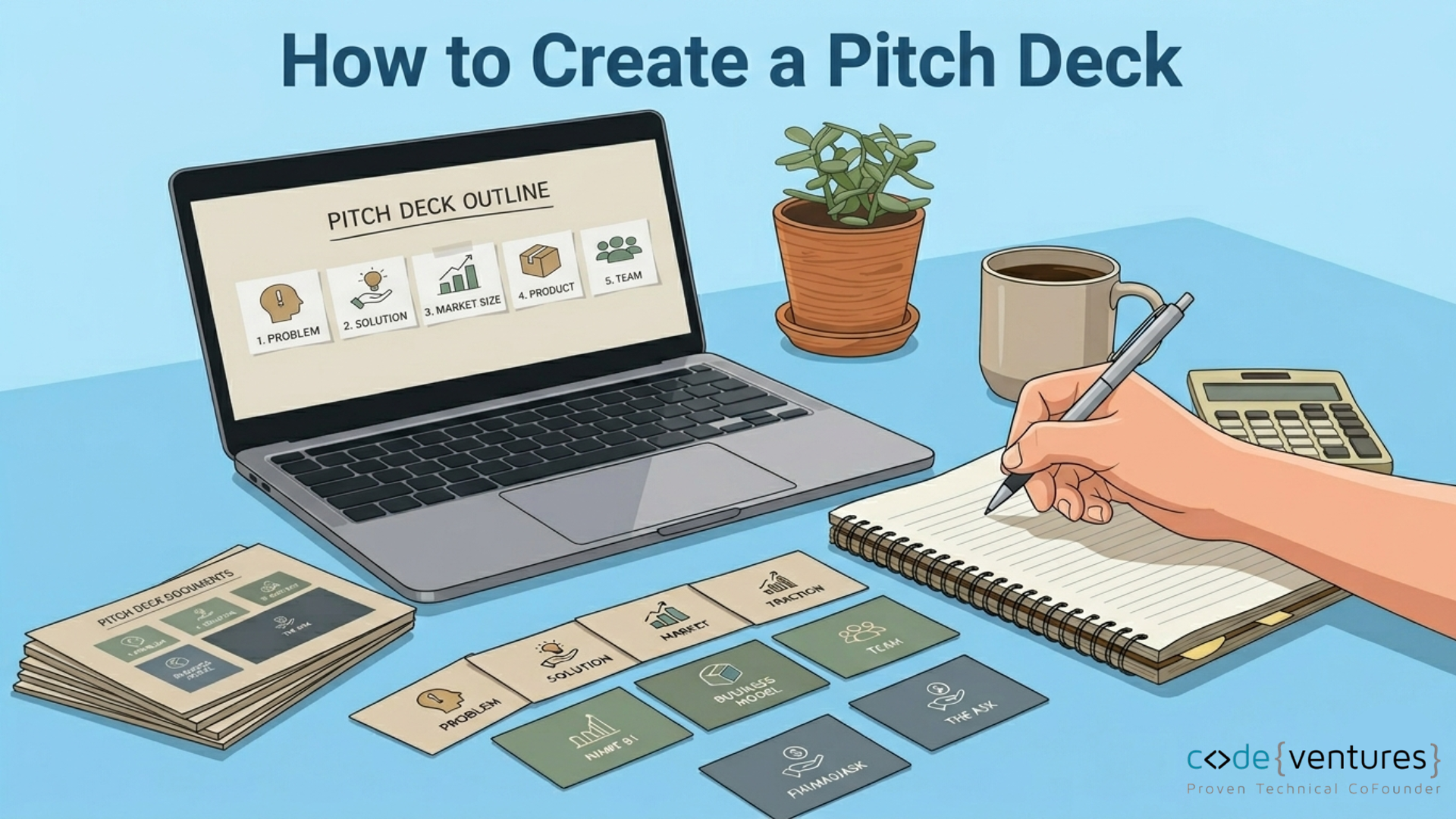
A pitch deck is a brief presentation that outlines your company, product, or business concept. It is typically made with slides and used to communicate vital information to partners, investors, or prospective clients. Your company’s objectives, market opportunity, business model, financial strategies, and growth prospects are all highlighted in a pitch deck.
A well-designed pitch deck helps you clearly communicate your vision and business strategy. It provides stakeholders and investors with a brief overview of your business’s operations and future. You can raise money, establish credibility, and spark interest in your company with the aid of a compelling pitch deck.
Pitch decks are examined by investors to see whether a company merits further investigation. They search for details such as the problem being solved, market size, business model, prospective revenue, competitors, and the company’s personnel. Investors may swiftly evaluate the possibility and decide whether it aligns with their investment objectives with the aid of a concise and persuasive pitch deck.
Why a Pitch Deck Is Important
A pitch deck is frequently the first thing stakeholders, partners, or investors see about your company. You can communicate your idea clearly and professionally with the aid of a well-prepared pitch deck.
Creates a Strong First Impression: Your pitch deck gives people their first look at your business. A clear and attractive presentation can capture their attention and build confidence in your idea.
Communicates Your Business Idea Clearly : A pitch deck aids in outlining your company’s operations, the issue it addresses, and its strategies for success. This facilitates others’ comprehension of your vision.
Helps Investors Understand the Opportunity: Pitch decks are a quick way for investors to learn about your market, competitive advantage, growth potential, and business plan. They can see the worth of your company with the aid of a strong pitch deck.
Supports Fundraising Efforts : A pitch deck gives potential investors the essential details they need to assess your business. Your chances of getting funds can be improved with a compelling presentation.
How to Create an Effective Pitch Deck
A strong pitch deck presents your company’s story in an understandable and captivating way. Each slide should include important information while maintaining the presentation’s clarity and conciseness. The essential components of every successful pitch deck are listed below.
1. Start With a Clear and Engaging Introduction
Your company should be introduced, and its operations should be described in the opening slides. Add a succinct synopsis of your business, your mission statement, and your value proposition. This makes it easier for investors to grasp your vision and what makes your company special.
2. Define the Problem
Clearly describe the issue that your target market is facing. Describe the market’s problems and the reasons why the current solutions fall short. Establishing the significance of your firm is aided by proving a genuine market need.
3. Present Your Solution
Once the issue has been identified, describe how your product or service resolves it. Give a summary of your solution and emphasize its key advantages. Pay attention to how it enhances the client experience or more successfully solves particular problems than existing options.
4. Explain Your Market Opportunity
Investors are interested in your market’s potential size. Describe your target market and give details about its size, industry trends, and prospects for expansion. This aids in showcasing your company’s long-term potential.
5. Showcase Your Product
Give investors a closer look at your product or service in this section. Emphasize the main attributes, characteristics, and advantages. Adding screenshots, product photos, or highlights from a demo can help make your presentation more interesting and comprehensible.
6. Describe Your Business Model
Describe how your business makes money, including your monetization model, revenue streams, and pricing strategy. Investors must comprehend how your company intends to generate revenue and accomplish long-term expansion.
7. Highlight Your Competitive Advantage
Every company has to contend with competition. By contrasting your solution with that of competitors, you may demonstrate how your business is unique. Emphasize the market differentiators, strengths, and unique selling qualities that provide you a competitive advantage.
8. Share Your Traction and Achievements
Include any significant accomplishments your company has already made in your pitch deck. Revenue growth, client acquisition figures, fruitful collaborations, product launches, or other quantifiable accomplishments that show advancement could be examples of this.
9. Introduce Your Team
Investors frequently put just as much money into individuals as they do into ideas. Describe your founders and leadership group, emphasizing their background, abilities, and knowledge. Investor confidence in your company’s capacity to carry out its ambitions might be boosted by a competent workforce.
10. Provide Financial Information
Give important financial data, such as growth projections, expected expenses, and revenue forecasts. Provide accurate numbers to back up your company plan and demonstrate how you intend to grow in the future.
11. Explain Your Funding Request
Indicate exactly how much money you need and how you intend to use it if you’re looking for an investment. Describe how the money will help with hiring, marketing, product development, business expansion, and other key projects. Transparency and a clear plan for the required funding are valued by investors.
Essential Slides Every Pitch Deck Should Include
Although each pitch deck is unique, the majority of effective presentations have a similar format. Every slide has a distinct function and aids investors in comprehending your company, market potential, and growth prospects. The essential slides that should be part of a standard pitch deck are listed in the table below.
| Slide | Purpose |
| Title Slide | Introduce your company |
| Problem | Define the market need |
| Solution | Present your offering |
| Market Opportunity | Show growth potential |
| Product | Demonstrate the solution |
| Business Model | Explain revenue generation |
| Competition | Highlight differentiation |
| Traction | Prove market validation |
| Team | Build investor confidence |
| Financials | Show growth projections |
| Funding Ask | Specify investment needs |
Common Pitch Deck Mistakes to Avoid
Even great business ideas can fail to attract investors if the pitch deck is poorly prepared. Avoid these common mistakes to create a more effective presentation:
- Including too much information on each slide
- Using complicated language or industry jargon
- Ignoring market research and supporting data
- Presenting unrealistic or weak financial projections
- Poor design, formatting, or inconsistent branding
- Not clearly stating the funding amount being requested
- Failing to explain the problem and solution clearly
- Having no clear value proposition or competitive advantage
- Overlooking customer traction and business achievements
- Not providing enough information about the founding team
- Making the presentation too long and difficult to follow
- Using too many text-heavy slides with few visuals
- Focusing on features instead of customer benefits
- Providing outdated or inaccurate data
- Not tailoring the pitch deck to the target audience or investors
- Ignoring potential risks and market challenges
- Lacking a clear call to action at the end of the presentation
- Failing to proofread for spelling and grammar errors
By avoiding these mistakes, you can create a pitch deck that is clear, professional, and more likely to capture investor interest.
Tips for Creating a Winning Pitch Deck
It takes more than merely disseminating information to create an effective pitch deck. It should tell a gripping tale, maintain audience interest, and make it obvious why investing in your company is worthwhile. These pointers can assist you in creating a more compelling pitch deck.
Keep Slides Concise
Steer clear of packing presentations with too much text. Keep your writing simple and easy to understand, and concentrate on the most crucial aspects. Pitch decks are frequently reviewed by investors, simplicity is essential.
Use Visuals and Data Effectively
Compared to lengthy text passages, charts, graphs, pictures, and screenshots can help you communicate your thoughts more effectively. Make your presentation more interesting by using images to bolster your points.
Focus on Storytelling
A strong pitch deck conveys a narrative. Describe the issue, offer a solution, and demonstrate how your company may expand. Investors are better able to comprehend and recall your company when it has a clear narrative.
Highlight Measurable Results
Incorporate numbers that show progress whenever you can. Partnerships, revenue growth, customer acquisition, and other important metrics can assist establish trust and demonstrate the success of your company.
Tailor the Deck to Your Audience
Priorities may vary among investors. Whether it’s market potential, technology, revenue growth, or business strategy, tailor your pitch deck to highlight the information most pertinent to your audience.
Practice Your Presentation
A confident presentation is necessary for even the strongest pitch deck. Be ready to respond to inquiries and practice providing a concise explanation of each slide. Potential investors can be strongly impressed by a well-prepared presentation.
Conclusion
A pitch deck is one of the most important tools for presenting your business to investors, partners, and stakeholders. It helps communicate your vision, explain your market opportunity, and demonstrate why your business is worth investing in. By including the right slides, presenting clear and accurate information, and avoiding common mistakes, you can create a pitch deck that captures attention and builds confidence. Whether you are launching a startup, seeking funding, or pursuing strategic partnerships, a well-crafted pitch deck can significantly improve your chances of success.
Need help creating a professional pitch deck that attracts investors?
Building a compelling pitch deck from scratch can take time. A pitch deck generator can simplify the process by providing ready-made templates, slide structures, and design elements that help you create professional presentations quickly.
Whether you’re preparing for investor meetings, startup funding rounds, or business partnerships, a pitch deck generator can help you organize your ideas and present them with confidence.
Start creating your pitch deck today and turn your business vision into a presentation that gets noticed.
Got a startup idea but no tech partner?
Create the perfect elevator pitch and attract your co-founder today!