
What Early-Stage Founders Need Beyond Startup Mentorship
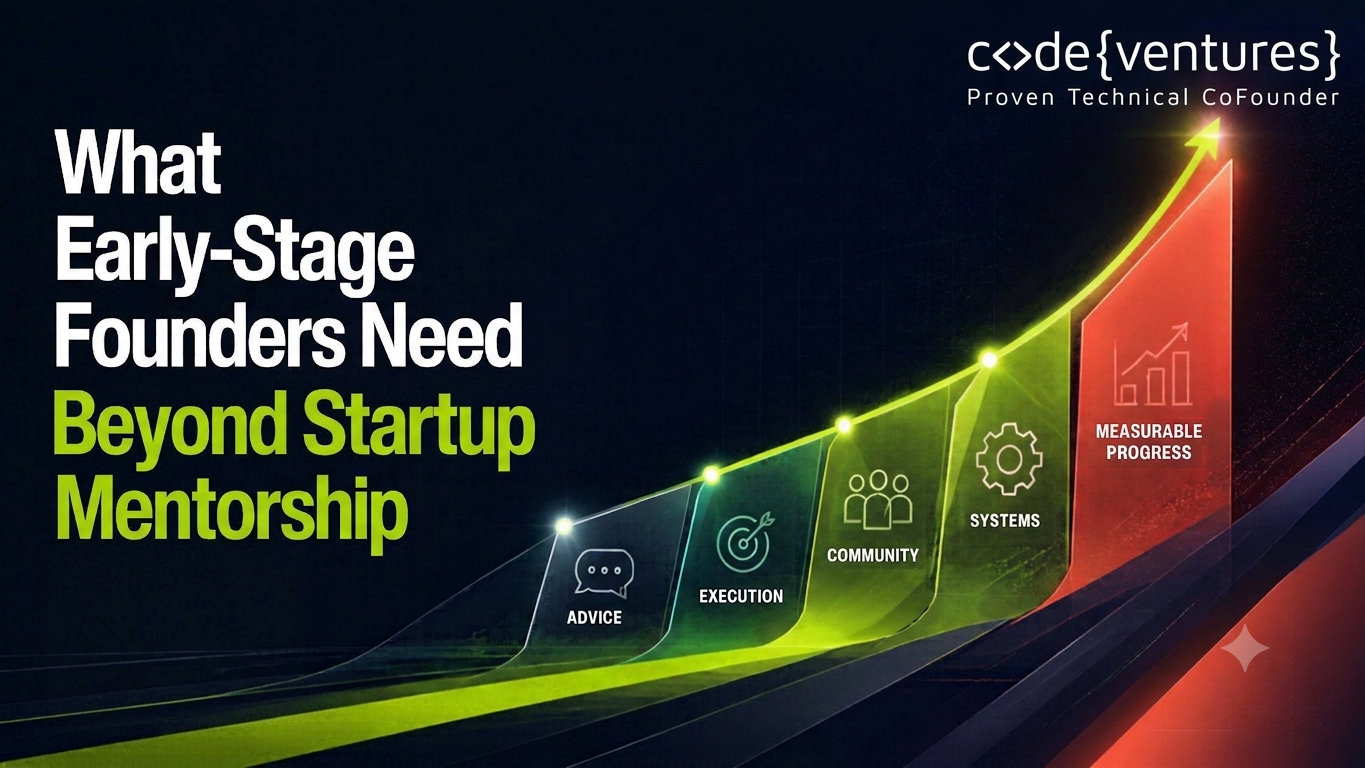
Starting a business involves more than having a promising idea, finding customers, or securing initial funding. Early-stage founders must make several important decisions about their product, technology, operations, and market strategy, often while working with limited resources and a small team.
Startup incubators and mentorship programs can provide valuable guidance, industry connections, and access to resources. However, receiving advice and having the expertise to put that advice into action are two different things.
A founder might understand what their product needs, identify their target audience, and have a clear business plan, but still struggle to turn those decisions into a working product and a market-ready business.
This gap between planning and execution is one of the challenges early-stage startups often overlook.
Whether founders participate in an incubator program or build independently, they need the right combination of technical expertise, product direction, and go-to-market planning to move forward. Understanding these requirements early can help prevent unnecessary delays, disconnected decisions, and missed growth opportunities.
1. Technical Ownership Beyond Having Developers
One of the first challenges technology startups face is deciding who will take responsibility for the technical side of the business.
Founders may have access to freelance developers, development agencies, or even an initial engineering team. However, having people who can write code does not necessarily mean someone is overseeing the overall technical direction.
Important decisions need to be made throughout the product journey:
- Which technologies are suitable for the product?
- How should the application architecture be structured?
- Are security and infrastructure requirements being addressed?
- How will the product accommodate future functionality and user growth?
- Who is responsible for technical quality and long-term maintenance?
Without clear technical ownership, these decisions can become disconnected. Founders may end up managing developers without having the expertise to evaluate their recommendations or understand the long-term implications.
A technical co-founder provides this missing leadership. They connect business requirements with engineering decisions, oversee development priorities, and ensure the technical foundation supports the company’s objectives.
For early-stage founders, having someone accountable for technology can make the difference between simply getting a product built and building something that can evolve with the business.
2. Product Direction That Connects Business Goals With Development
A startup can have a clear business vision and still struggle to translate it into a well-defined product.
This often happens when business planning and product development happen separately.
Founders may identify several customer problems and suggest multiple features, while developers focus on implementing the requirements they receive. Without someone connecting these activities, the final product may not fully address the intended business problem.
A structured product direction helps bring these elements together.
It should establish:
- The primary problem the product is designed to solve.
- The specific audience the product will serve.
- The essential functionality required for the initial release.
- The relationship between product features and business objectives.
- The priorities for future development.
Product strategy also needs to evolve as the business learns more about its customers.
For example, a startup building a SaaS platform may initially plan several advanced features. However, early customer conversations might reveal that users value one simple workflow more than the complete feature set.
Without a clear product direction, the development team may spend time and resources on functionality that does not contribute to the product’s immediate value.
This is why product strategy, design, and engineering should work together rather than operate as separate activities.
3. Go-to-Market Planning Before the Product Is Ready
A common mistake among early-stage founders is treating marketing as something that begins after product development is complete.
In reality, go-to-market planning should develop alongside the product.
A startup needs to understand not only what it is building but also how it will reach the people who are likely to use or purchase it.
Without early planning, founders may finish development only to discover that they have no clear customer acquisition strategy.
Some important considerations include:
Target audience: Who is most likely to benefit from the product? Are there specific industries, business sizes, or customer segments to prioritize?
Positioning: What makes the product valuable compared with existing alternatives? Can potential customers understand its purpose quickly?
Acquisition channels: How will the startup reach its audience? Potential channels may include search engines, content marketing, social media, partnerships, communities, and direct outreach.
Launch strategy: Will the product be introduced through a limited pilot, an early-access program, or a wider public launch?
Customer on boarding: How will new users understand the product and experience its value?
These decisions influence product development too. For example, if a startup plans to acquire customers through partnerships, it may need specific integration capabilities or on boarding features.
Bringing go-to-market considerations into early product planning helps ensure that the product is being developed with its intended audience and commercial objectives in mind.
4. Coordination Between Product, Design, and Engineering
Another challenge founders often underestimate is the coordination required to turn an idea into a consistent product experience.
Product planning, user experience design, and engineering are closely connected. When these areas are handled independently, important details can be lost between stages.
Consider a startup building a mobile application.
The founder may communicate the business requirements, a designer may create the interface, and developers may build the application. However, if the design does not account for technical limitations or the development team does not fully understand the intended user experience, the final application may differ from the original vision.
A coordinated approach helps avoid these issues.
It involves:
- Translating business requirements into clear product specifications.
- Designing user journeys before implementation.
- Evaluating technical feasibility during the design stage.
- Keeping design and development teams aligned.
- Reviewing functionality throughout development.
- Maintaining consistency across different devices and platforms.
This coordination becomes particularly important when a startup has a limited budget. Repeated design changes, unclear requirements, and development rework can consume resources that could otherwise be invested in improving the product.
Having product, design, and engineering expertise working together gives founders a more connected development process.
5. Operational Readiness Beyond the Initial Launch
Launching a product is an important achievement, but it is not the end of the technical and operational work.
Once real customers start using the product, startups need to manage several ongoing responsibilities.
These include:
- Application performance and up time monitoring.
- Cloud infrastructure and hosting management.
- Security updates and data protection.
- Bug fixes and technical maintenance.
- User support and issue resolution.
- Product updates and new functionality.
- Infrastructure planning as usage increases.
Some founders allocate most of their initial budget to development and overlook these continuing requirements.
As a result, they may face difficulties maintaining the product or responding to customer expectations after launch.
Operational planning should therefore be part of the original product road-map. Founders need to understand what it will take to operate the product reliably, not just what it will cost to build it.
A strong technical foundation and ongoing engineering support help startups manage these responsibilities as they grow.
6. Turning Customer Insights Into Actionable Product Improvements
Customer feedback is valuable, but collecting feedback alone does not improve a product.
Startups need a process for understanding what customers are communicating and translating those insights into development priorities.
For example, users may repeatedly report difficulties with a particular feature. The product team needs to determine whether the problem comes from the interface, the underlying functionality, or a mismatch between the feature and the user’s expectations.
This requires collaboration between product and engineering.
Useful practices include:
- Reviewing customer feedback regularly.
- Monitoring product usage and engagement.
- Identifying recurring user difficulties.
- Prioritizing improvements based on customer impact.
- Releasing updates and evaluating their results.
This creates a continuous improvement process where product decisions are informed by real usage rather than assumptions.
Over time, this can help startups improve customer experience, strengthen retention, and move closer to product-market fit.
7. Continuity Between Startup Planning and Execution
Perhaps the most overlooked requirement is continuity.
Early-stage startups frequently work with different people or service providers for different activities. One advisor helps with the business plan, another team handles design, and a separate vendor manages development.
Each person may contribute valuable expertise, but the founder still needs to ensure that everyone understands the same business objectives and product direction.
When information is not transferred properly, decisions may need to be revisited, requirements may become inconsistent, and development timelines can extend.
A more connected approach keeps the product vision, technical decisions, and business priorities aligned throughout the startup journey.
This does not mean every startup needs a large internal team from day one. It means founders should establish clear responsibilities and work with partners who understand how their contribution fits into the bigger picture.
A technical co-founder or experienced startup-building partner can help provide this continuity by remaining involved across product planning, design, engineering, development, and deployment.
Choosing the Right Support for Your Startup Stage
Not every startup requires the same kind of external support. The right approach depends on the product, the founding team’s experience, available resources, and current business priorities.
Here is a simple way to understand the different support requirements:
| Startup requirement | Support that may be needed |
|---|---|
| Business direction | Mentors, advisors, and industry experts |
| Product planning | Product strategists and experienced product teams |
| Technical leadership | Technical cofounders or technology leaders |
| Product development | Designers and engineering teams |
| Go-to-market preparation | Marketing strategists and growth specialists |
| Post-launch operations | Technical maintenance and infrastructure support |
Incubators and accelerators can provide several of these resources through structured programs, mentorship, and professional networks. However, founders should evaluate whether a particular program offers the practical expertise and hands-on involvement their startup actually needs.
For a better understanding of these options, read our guide on Startup Accelerators, Incubators, and Studios: Which One Fits You?.
Founders should also consider what they need from a technical partner before committing to a development arrangement. Our article, Freelancers, Agencies, or a Technical Co-Founder? How to Choose the Right Path, explores the differences between these options.
How CodeVentures Helps Bridge the Gap Between Planning and Execution
At CodeVentures, we understand that early-stage founders need more than development resources to turn their business ideas into successful technology products.
Our technical co-founder approach brings product strategy, design, engineering, development, and deployment together.
We work alongside founders to understand their business objectives, define product requirements, evaluate technical feasibility, and establish a development road-map.
Through our Discovery Workshop, founders can turn an initial concept into a structured product blueprint, covering areas such as user flows, architecture, user stories, development priorities, timelines, and go-to-market planning.
Our support extends across web application development, mobile app development, and deep technology solutions, helping founders build products that align with their business requirements.
We also recognize the importance of ongoing technical guidance as products evolve. Having a consistent technical partner helps founders make informed decisions, manage development priorities, and prepare their products for future requirements.
For founders looking for practical tools and guidance, our Startup Resources page offers resources to support different stages of the startup journey.
Conclusion: Startup Success Requires More Than Advice
Startup mentorship, incubator programs, and professional networks can provide valuable direction, but early-stage founders also need the expertise to turn that direction into action.
Technical ownership, product coordination, go-to-market planning, operational readiness, and continuous improvement all contribute to building a sustainable business.
The challenge is not necessarily finding more advice. It is ensuring that the right people are involved in making decisions and executing the work.
For technology startups, having an experienced technical co-founder can connect business objectives with product development and long-term technical planning.
Building a startup and need more than just development support?
CodeVentures works alongside founders as their technical co-founder, helping turn business ideas into well-planned, developed, and deployable products.
Explore CodeVentures and discover how the right technical partnership can help move your startup forward.
